Push-Back Racking
High-Density Storage. Faster Throughput. Fewer Aisles
What Is Push-Back Racking?
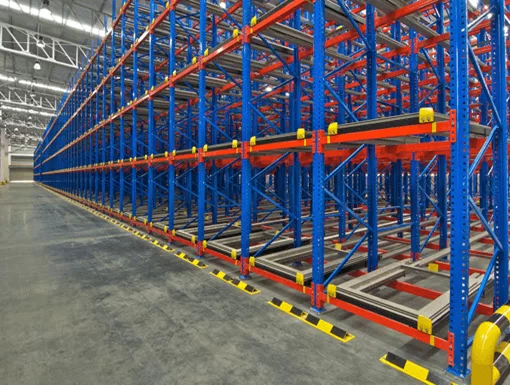
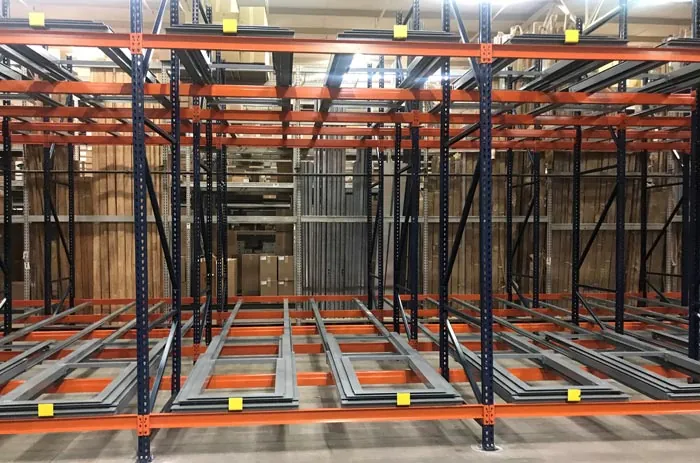
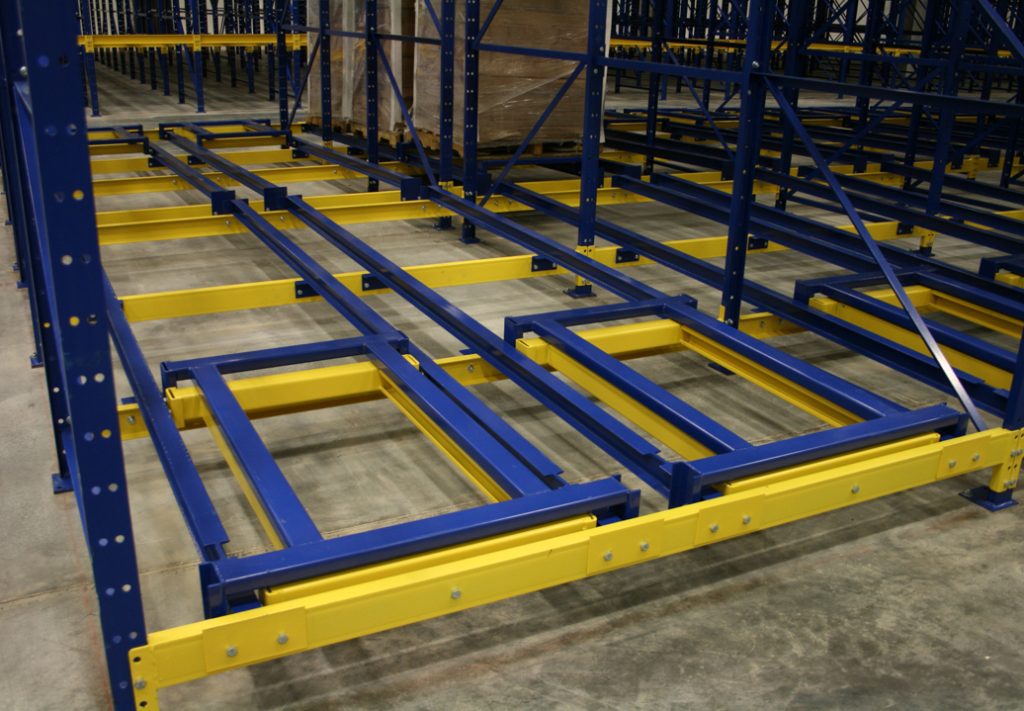
Push-back racking systems are engineered for medium-to-high-density pallet storage using a last-in, first-out (LIFO) flow. Pallets rest on nested carts that ride on inclined rails—each new pallet “pushes back” the previous one, allowing up to six deep per lane.
This configuration reduces aisle count while keeping quick, selective access to multiple SKUs in each lane. At Vertical Storage USA, we design push-back rack systems that maximize cubic capacity without slowing order fulfillment.
Key Advantages
High Storage Density
Store up to 90% more pallets than selective racking.
Reduced Aisle Space
Every aisle removed adds usable storage area.
Fast LIFO Access
Ideal for medium-rotation SKUs and staging areas.
Fewer Forklift Movements
Operators stay at the lane face—no drive-in travel.
Adaptable Layouts
Works with roll-formed or structural frames, single or double-wide bays.
How It Works
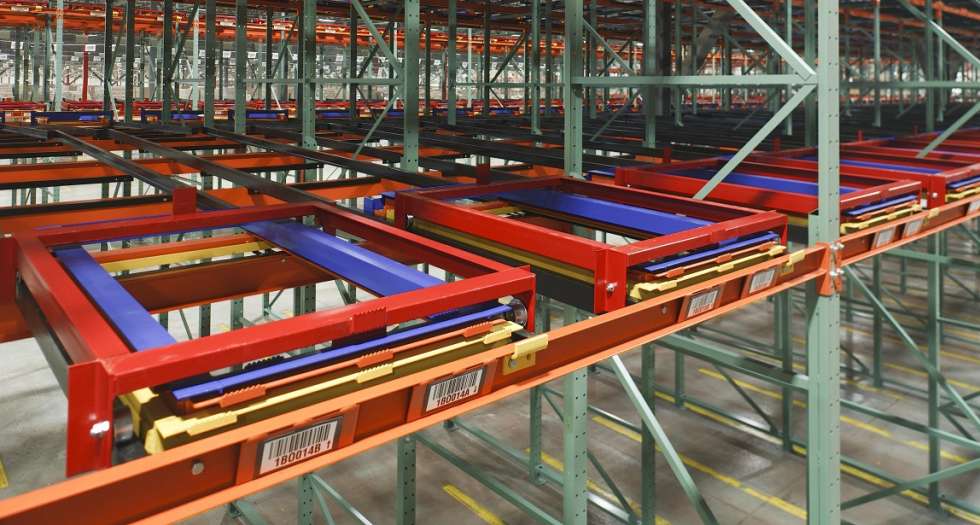
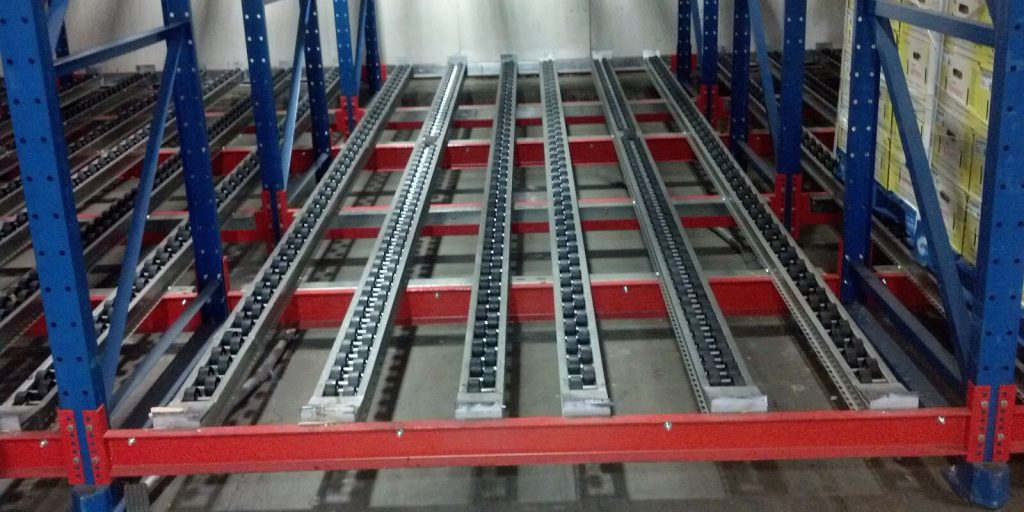
Each lane holds a series of nested carts that move along sloped rails within the rack structure.
The first pallet is placed on the top cart.
The next pallet pushes the previous cart backward.
When a pallet is removed, gravity returns the remaining carts forward to the pick position.
This simple mechanical design means no powered components, no maintenance, and smooth pallet flow using standard forklifts.
Push-Back vs. Other Racking Types
| Feature | Push-Back | Drive-In | Selective | Pallet Flow |
|---|---|---|---|---|
| Storage Depth | Up to 6 pallets | Up to 10 | 1 | 20+ |
| Access Type | LIFO | LIFO | Direct | FIFO |
| SKU Variety | Medium | Low | High | Medium |
| Density | High | Very High | Low | High |
| Aisle Reduction | 30–50% | 50–70% | — | 30–50% |
Frequently Asked Questions (FAQs)
What is push-back racking?
A high-density, last-in/first-out (LIFO) system where pallets ride on nested carts along sloped rails. Each new pallet “pushes back” the previous one; gravity returns carts to the pick face.
When is push-back better than drive-in or pallet flow?
Choose push-back for medium-rotation SKUs needing fast lane-face access with fewer aisles. For maximum density with fewer SKUs, compare Drive-In Racking. For strict FIFO or date-sensitive goods, see Pallet Flow. For maximum selectivity, use Selective Racking.
How deep can lanes go?
Commonly 2–6 pallets deep per lane. Depth depends on load weights, pallet quality, bay width, and lift equipment.
What pallet types work best?
Sturdy, consistently sized pallets (48×40 GMA or equivalent) with bottom deckboards that won’t catch on cart wheels/rollers. Broken stringers and overhanging product reduce performance.
Is push-back LIFO only?
Yes. It’s ideal where LIFO is acceptable—staging, buffer storage, medium-turn SKUs, and wave picking.
How do you keep pallets from “popping” or carts from sticking?
Proper rail pitch, quality wheels/bearings, pallet inspections, and end-stops/retainers. Our Rack Inspections program catches wear before it impacts flow.
What’s the install footprint vs. selective racking?
Expect 30–50% aisle reduction with higher pallet density. Our Warehouse Layout & Design will model throughput vs. density trade-offs.
Used & Refurbished Push-Back Racking
Save on cost without compromising quality.
Explore our Used Equipment & Systems inventory for inspected, certified push-back racks ready for installation.
Start Your Project
Need a high-density racking system that keeps operations moving fast? Let Vertical Storage USA design a push-back rack solution tailored to your throughput and footprint.