Maximizing warehouse space and improving order fulfillment efficiency are priorities for facilities in manufacturing, distribution, e-commerce, and spare parts industries. As real estate and labor costs continue to rise, automated systems that reclaim underutilized square footage and minimize manual labor present compelling business cases.
A VLM storage system offers a compact, secure, and highly adaptable storage solution that enables operations of every scale to modernize workflows and delay — or even avoid — the need for costly warehouse expansion.
For operations under space constraints or those seeking to optimize throughput, a VLM storage system provides measurable results. Many facilities with space recovery objectives report a typical return on investment within 12–18 months. Selecting the right system requires more than reviewing technical brochures; it calls for understanding practical capabilities, safety features, scalability, and integration with larger warehouse operations.
This comprehensive guide details the core features, technical considerations, and best practices to help you select the most effective VLM storage system for long-term success.
What Is a VLM Storage System?
Core Definition and the Goods-to-Person Principle
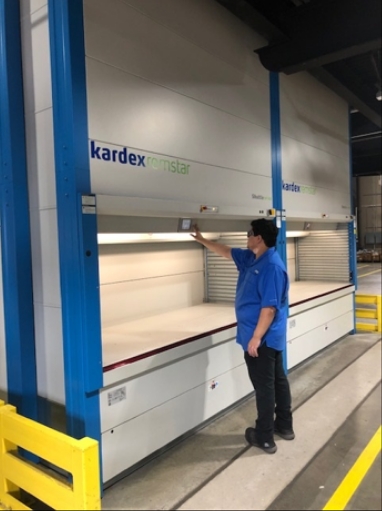
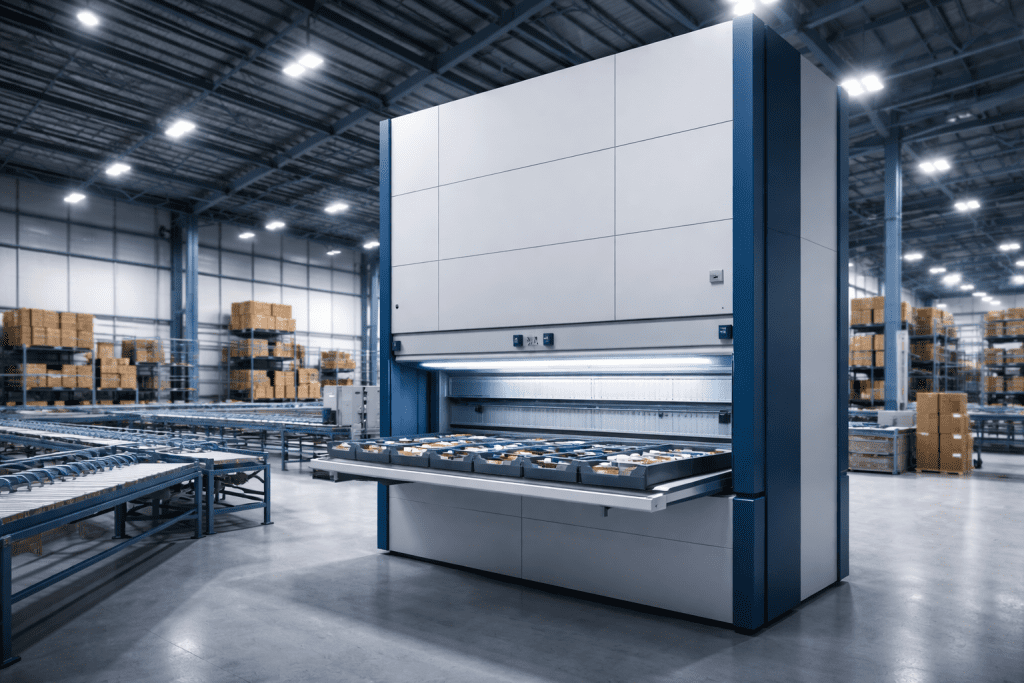
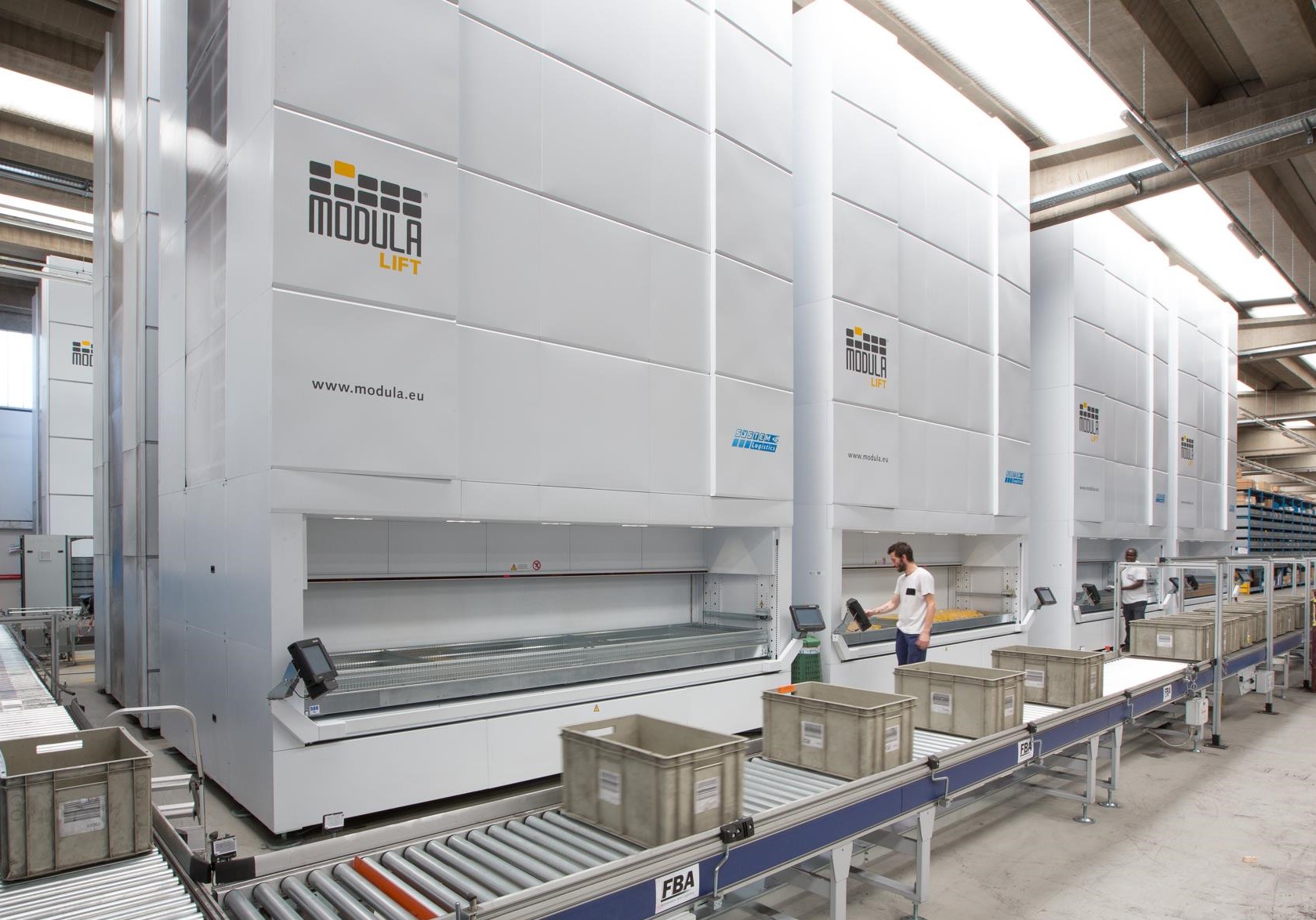
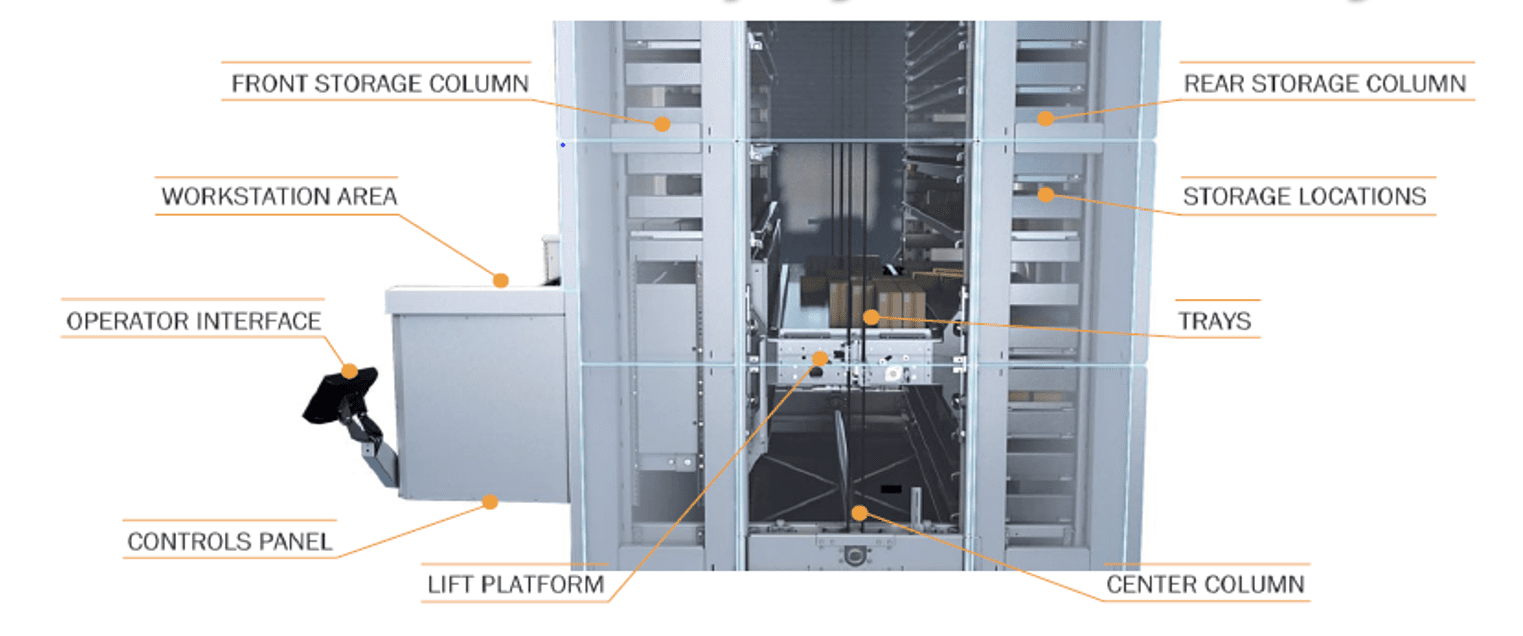
A VLM storage system (Vertical Lift Module) is an enclosed automated storage and retrieval system designed for the goods-to-person workflow. These systems consist of two vertical columns of trays with an automated extractor positioned between them.
Key components include:
Automated Tray Handling
Trays are stored in high-density vertical columns, allowing facilities to maximize ceiling height while maintaining a compact footprint.
Inserter/Extractor Mechanism
A lift mechanism retrieves trays from storage and delivers them to an ergonomic access opening for fast order picking.
Fully Enclosed Storage
Inventory remains secured inside the system, protecting items from dust, damage, and unauthorized access while improving inventory control.
Operators request trays through a touchscreen, handheld device, or warehouse management system. The VLM storage system then calculates the fastest tray movement and delivers items directly to the operator, typically within 20–30 seconds.
This “goods-to-person” approach dramatically improves efficiency by eliminating the need for workers to walk warehouse aisles searching for inventory.
How a VLM Storage System Differs from Traditional Storage
| Feature | VLM Storage System | Traditional Shelving/Racking | Carousel Systems |
|---|---|---|---|
| Space Utilization | Up to 85% less floor space | Large footprint | Up to 75% savings |
| Access Method | Goods-to-person | Person-to-goods | Goods-to-person |
| Security | Fully enclosed | Open storage | Semi-enclosed |
| Accuracy | Up to 99.9% | Manual picking | Moderate |
| Modularity | Highly scalable | Limited flexibility | Moderate |
Key differences include:
- A VLM storage system dynamically adjusts tray spacing to maximize vertical density.
- Enclosed storage improves security and inventory tracking.
- Modular designs allow systems to grow with operational demand.
Why Choose a VLM Storage System?
Organizations adopt a VLM storage system to improve storage density, increase productivity, and reduce operational costs.
Space Savings and Density Optimization
A VLM storage system can recover up to 85% of warehouse floor space compared to pallet racking or traditional shelving. By utilizing vertical height, facilities store more inventory in a significantly smaller footprint.
Dynamic tray positioning minimizes wasted space by automatically adjusting storage heights to match each SKU.
Productivity and Picking Accuracy
A VLM storage system delivers items directly to operators, eliminating walking time and reducing search delays.
Facilities often experience:
- Picking speeds up to 3x faster
- Accuracy rates up to 99.9%
- Reduced labor requirements
Integrated technologies such as pick-to-light and warehouse management software further improve efficiency.
Ergonomics and Workplace Safety
A VLM storage system keeps items at comfortable picking heights, reducing bending, lifting, and strain injuries.
Safety features often include:
- Light curtains
- Emergency stop systems
- Door interlocks
- Load sensors
These systems also maintain detailed user logs to improve inventory security and compliance.
Essential Features to Look for in a VLM Storage System
Selecting the right VLM storage system ensures long-term performance and adaptability.
Automatic Height Sensing
Sensors automatically measure stored product height and adjust tray placement accordingly.
Benefits include:
- Maximized vertical storage density
- Reduced wasted space
- Higher SKU capacity per unit
Powerful Extractor and Tray Handling
A high-quality VLM storage system should support heavy tray loads, often reaching 2,200 pounds per tray.
Multi-bay configurations can also allow simultaneous operations such as picking and replenishment.
Software Integration
Modern VLM storage systems integrate with ERP and WMS platforms.
Important software capabilities include:
- Inventory tracking
- Pick-to-light guidance
- User authentication
- Remote diagnostics
- Audit logs
Scalability and Modularity
A VLM storage system should be able to adapt to changing inventory needs.
Modular designs allow businesses to:
- Increase system height
- Add additional units
- Reconfigure trays
This ensures the system continues supporting operations as demand grows.
Safety and Security Systems
Leading VLM storage systems incorporate multiple safety layers including:
- Light curtain protection
- Overload detection
- Emergency stop buttons
- Access control systems
These features help protect both operators and inventory.
Technical Specifications to Evaluate
When selecting a VLM storage system, evaluate technical specifications against your inventory profile.
| Specification | Typical Range | Operational Impact |
|---|---|---|
| Tray Width | Up to 10 ft | Stores wider items |
| Tray Depth | 32–34 in | Supports deep containers |
| Tray Capacity | Up to 2,200 lbs | Handles heavy parts |
| System Height | 8–46 ft | Uses full building height |
| Cycle Time | 20–30 sec | Faster retrieval |
| Throughput | Up to 180 trays/hour | Supports high order volume |
| Picking Accuracy | Up to 99.9% | Reduces errors |
Matching specifications to real inventory data ensures optimal system performance.
Applications for a VLM Storage System
A VLM storage system supports a wide range of industries.
Small Parts and High-Density Inventory
Industries such as automotive, electronics, and healthcare benefit from the ability to store thousands of SKUs in a compact footprint.
Heavy Tools and Equipment
Reinforced trays allow a VLM storage system to store heavy tools, dies, and manufacturing components.
Temperature-Controlled Storage
Specialized VLM storage systems support refrigerated or climate-controlled environments for food and pharmaceutical inventory.
Integration with Warehouse Automation
A VLM storage system can integrate with technologies such as:
- automated storage and retrieval systems (AS/RS)
- goods-to-person robotics
- conveyor systems
- automated shelving systems
This enables fully automated warehouse workflows.
Implementation Tips and Common Pitfalls
Proper planning ensures a successful VLM storage system deployment.
Audit Inventory First
Document SKU dimensions, weights, and pick frequency to determine optimal tray configuration.
Measure Facility Space
Evaluate vertical clearance, floor space, and building codes before installation.
Test Software Integration
Verify compatibility with your ERP or WMS through live demonstrations.
Plan for Future Growth
Choose a VLM storage system that allows expansion as inventory volume increases.
Frequently Asked Questions About VLM Storage Systems
What is a VLM storage system?
A VLM storage system (Vertical Lift Module) is an automated storage and retrieval system that stores trays vertically and delivers items directly to an operator at an ergonomic access opening. By using a goods-to-person workflow, VLM systems reduce walking time, increase picking speed, and maximize vertical warehouse space.
How much space can a VLM storage system save?
A VLM storage system can recover up to 85% of floor space compared to traditional shelving or pallet racking. Because trays are stored vertically and spacing adjusts automatically based on product height, facilities can store more inventory within a smaller footprint.
What types of inventory work best in a VLM storage system?
A VLM storage system is ideal for storing small parts, spare components, tools, medical supplies, electronics, and high-SKU inventory. Many systems can also store heavy manufacturing tools or equipment using reinforced trays that support loads up to 2,200 pounds.
How fast can a VLM storage system retrieve items?
Most VLM storage systems deliver trays to operators within 20–30 seconds per retrieval. High-performance configurations can achieve throughputs of up to 180 tray deliveries per hour, significantly improving order fulfillment efficiency.
Final Thoughts
A VLM storage system provides measurable improvements in warehouse efficiency, floor space utilization, and inventory accuracy. When properly selected and implemented, these systems become a long-term strategic asset that supports growing operations while reducing labor demands.
With careful planning, the right VLM storage system can transform warehouse operations by delivering faster picking, improved safety, and scalable storage capacity.
by delivering faster picking, improved safety, and scalable storage capacity.