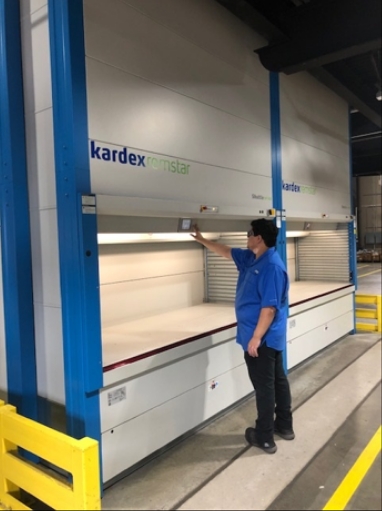
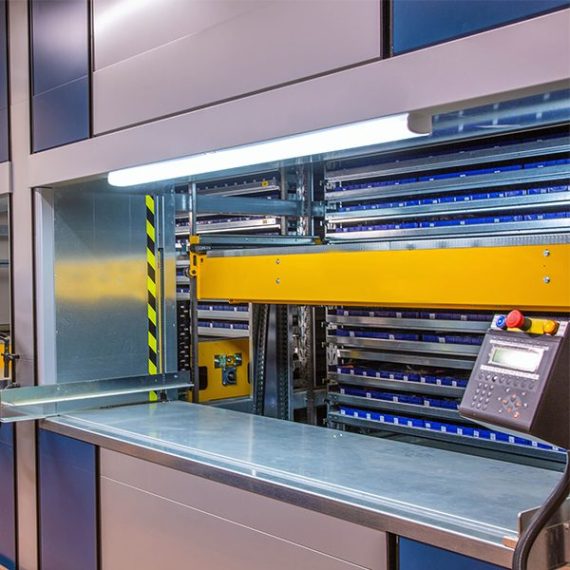
Warehouse automation has rapidly transitioned from a long-term strategic goal to an immediate competitive advantage. With rising labor costs, nationwide worker shortages, higher SKU variability, and pressure for faster fulfillment, warehouses can no longer afford to operate manually. The true value of automation—and the reason so many facilities are adopting it—is that its impact begins the very first day your system goes live.
Unlike traditional process changes that require months of training or long adjustment periods, warehouse automation delivers instant improvements in accuracy, productivity, safety, and inventory control. Whether you integrate a single Vertical Lift Module (VLM), a robotic goods-to-person solution, or a complete AS/RS system, the benefits appear from the first hour of operation.
Below is a deep, comprehensive breakdown of the day-one warehouse automation benefits companies experience when shifting from manual processes to modern, technology-driven workflows.
1. Reduced Labor Costs and Less Walking From Day One
The most immediate and noticeable impact of automation is the reduction in labor hours spent on non-value-added tasks—especially walking. Industry studies consistently show that warehouse workers may walk 5 to 10 miles per day, and up to 70% of their shift is spent simply traveling between storage locations. This is not productive time, nor is it scalable.
Automation eliminates unnecessary travel instantly. Systems such as VLMs, autonomous mobile robots (AMRs), automated guided vehicles (AGVs), and goods-to-person solutions transform workflows by bringing the product to the picker, not the picker to the product.
From the moment automation is activated:
Workers walk significantly less
Orders can be picked faster with fewer people
Fatigue decreases, boosting morale and retention
Warehouse throughput increases without adding headcount
Facilities using even a single VLM regularly report labor reductions of 20–40% within the first week. Goods-to-person robotics often increase productivity by 3× with the same staff.
Automation is one of the few warehouse investments that begins paying for itself immediately by reducing time spent on repetitive, inefficient tasks.
2. Dramatically Improved Accuracy and Fewer Costly Errors
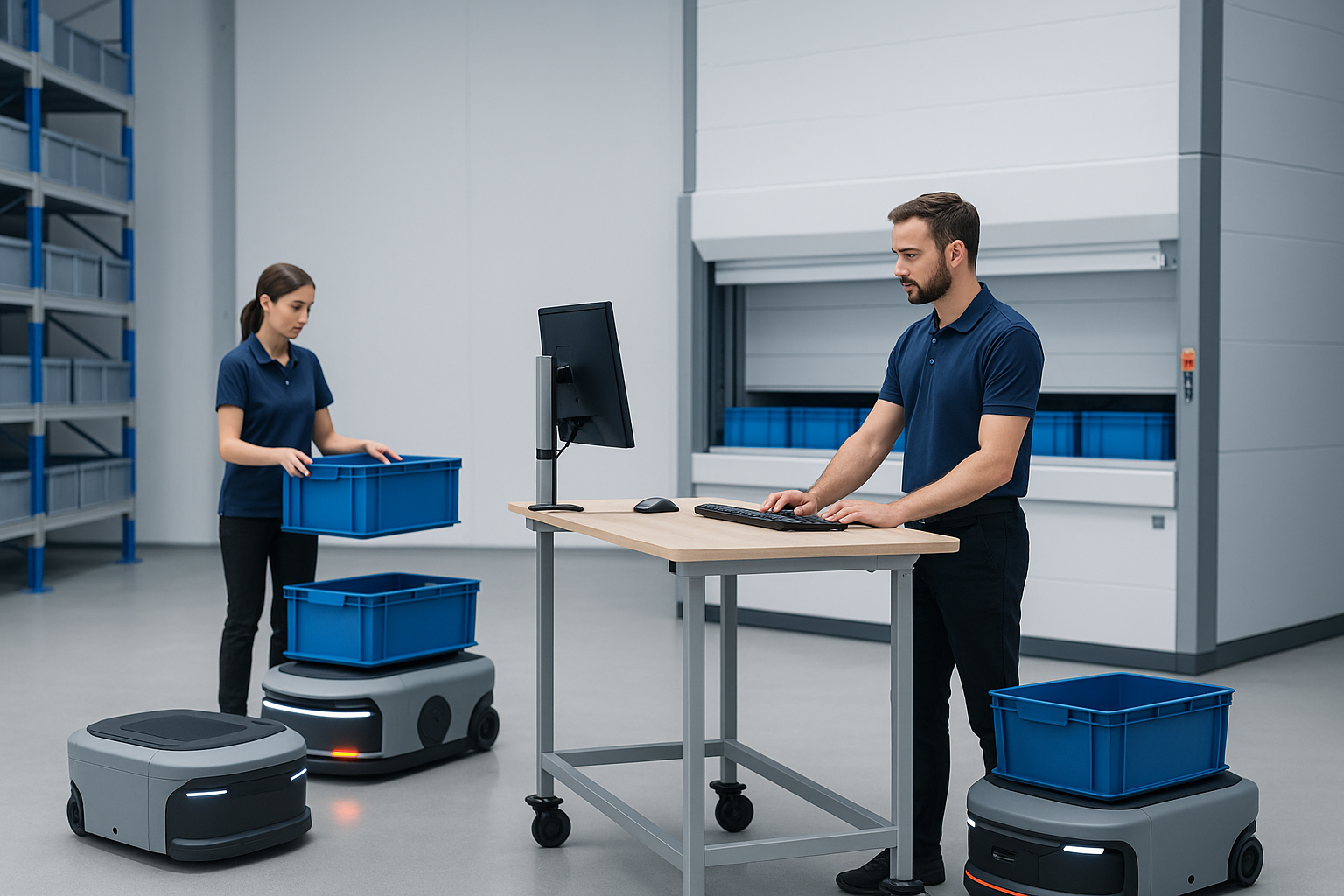
Human error is inevitable in a manual warehouse. Misplaced inventory, incorrect picks, and inaccurate replenishment decisions lead to:
Returns and reships
Lost customer trust
Delayed orders
Higher labor for rework
Inventory inaccuracies
Automation removes that variability. Systems like VLMs, shuttles, and robotic G2P platforms use integrated software workflows, barcode validation, and controlled access to ensure only the correct SKU is delivered.
As soon as automated workflows begin:
Operators no longer search for items
Machines present the correct part automatically
The chance of selecting the wrong SKU drops dramatically
Inventory movement is logged in real time
Every pick is verified before fulfillment
Most automated facilities achieve 99% to 99.9% accuracy, sometimes even higher if pick-to-light or scan-to-confirm systems are used.
This immediate reduction in errors saves money, protects customer satisfaction, and eliminates the “hidden costs” traditional warehouses rarely measure.
Learn how VLMs improve accuracy:
🔗 https://verticalstorageusa.com/vertical-lift-modules/
3. Reclaim 60–90% of Floor Space Without Expanding Your Building
A powerful but often underestimated benefit of an automated warehouse is the ability to reclaim massive amounts of space. Traditional shelving forces operations to grow horizontally, consuming valuable square footage and requiring wider aisles for walking and forklift traffic.
Automated storage uses vertical height, transforming wasted airspace into productive inventory capacity.
Automation systems—especially VLMs and vertical carousels—consolidate dozens of shelving bays into a single compact storage tower. It’s common for a VLM to replace 30 to 40 shelving units and free up 60% to 90% of the footprint.
From day one, a warehouse can:
Increase storage density
Make room for new SKUs without expanding the facility
Introduce new production or assembly areas
Improve forklift safety by reducing aisle congestion
Create cleaner, more organized workflows
Space savings are so significant that many companies avoid expensive warehouse expansions simply by implementing automated storage solutions.
4. Faster Throughput and Higher Productivity Immediately
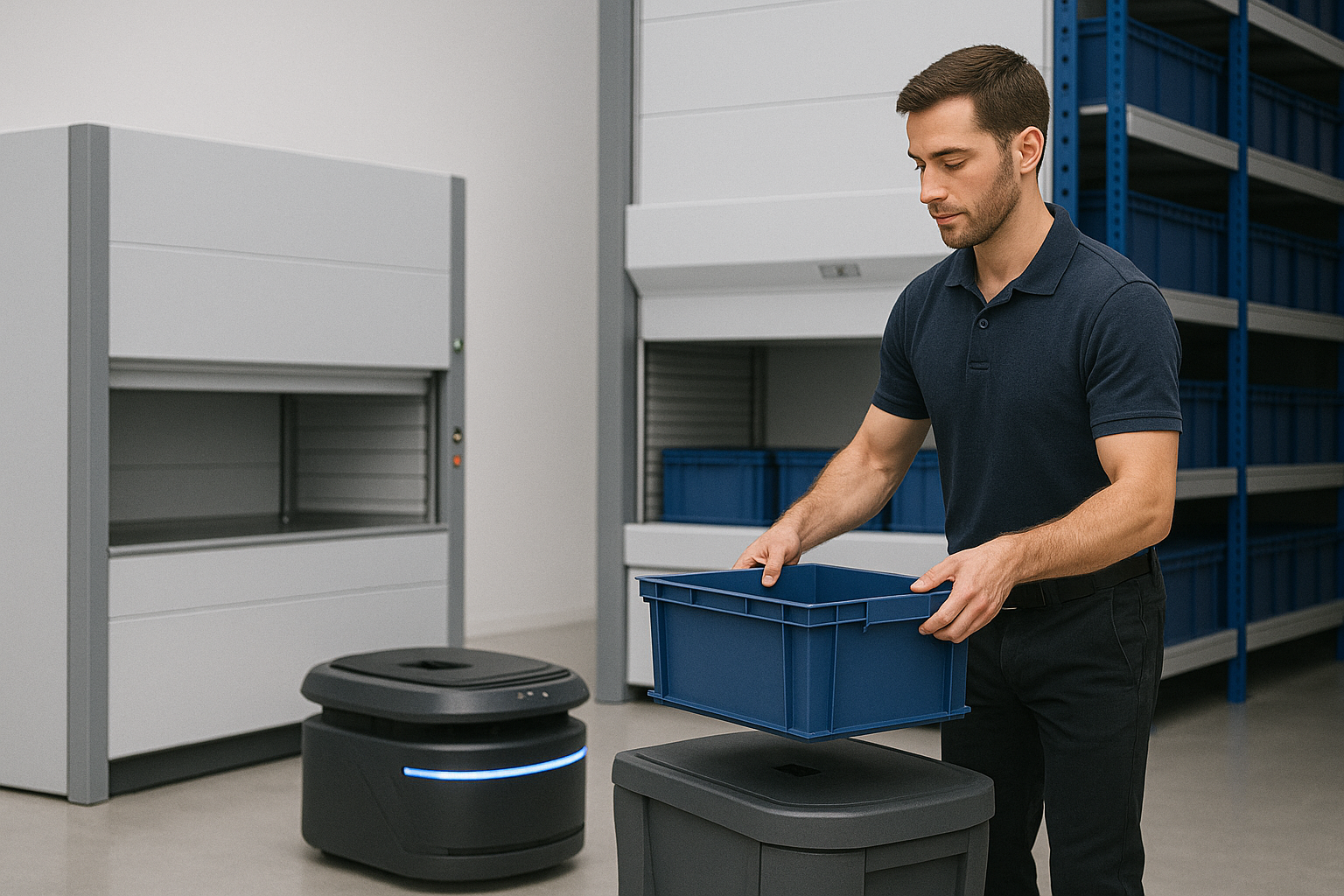
Speed is a foundational advantage of an automated warehouse. Robotic systems, shuttle-based AS/RS solutions, and VLM-based workflows retrieve inventory far faster than manual labor can.
Examples of immediate day-one speed improvements:
VLMs deliver trays in seconds, eliminating long walk paths
AS/RS shuttles retrieve totes at high speed with no downtime
AMRs transport goods continuously without breaks
Automated sortation reduces bottlenecks at pack-out
Pickers stay in one ergonomic station instead of traveling aisles
The result? Many warehouses experience 2× to 5× increases in picking performance immediately, even before fully optimizing their workflows.
This speed advantage becomes even more valuable during:
Peak seasons
Holiday surges
Labor shortages
Rapid growth environments
Automation turns throughput into a predictable, scalable function rather than one dependent on staffing levels.
Explore warehouse optimization ideas:
🔗 https://verticalstorageusa.com/warehouse-optimization/
5. A Safer and More Ergonomic Warehouse From the First Day
In warehouses, many of the most frequent injuries come from manual effort:
Climbing ladders
Lifting heavy bins
Bending, twisting, and reaching
Working around forklifts or pallet jacks
Navigating cluttered aisles
Automation immediately removes or minimizes these risky tasks. VLMs deliver trays at waist height, eliminating ladder use. Goods-to-person robots remove the need to push carts or move heavy items across the warehouse. Automated systems reduce forklift traffic, which is one of the leading causes of warehouse accidents.
On day one, safety improves through:
Better ergonomics
Reduced lifting
Fewer repetitive strain injuries
Less congestion on the warehouse floor
Controlled system-directed movements
A safer workplace isn’t only good for employees—it lowers workers’ comp claims, reduces absenteeism, and increases retention.
6. Real-Time Inventory Visibility and More Accurate Data
Traditional warehouses rely heavily on manual counts, spreadsheets, and operator memory. This leads to lost inventory, emergency replenishment, slow cycle counting, and inaccurate purchase planning.
Automated warehouses, by contrast, are data-driven from day one.
Every tote, tray, or SKU movement is logged automatically. WMS/WES integrations track:
Exact SKU locations
Pick history
Quantity changes
Replenishment needs
Lot and serial details
Inventory aging and velocity
This means the moment automation goes live, inventory accuracy increases dramatically. Cycle counting becomes faster, planning becomes easier, and surprise stockouts almost disappear. Operations finally gain full visibility into their material flow.
7. Lower Operating Costs Throughout the Entire Facility
One of the most important benefits of an automated warehouse is the immediate reduction in overall operating costs. Even beyond labor, automation improves cost efficiency in ways that quickly compound.
Costs reduced from day one include:
Mis-pick and return costs
Excess labor hours
Product damage from manual handling
Forklift maintenance
Utility costs per stored SKU
Travel time between work areas
Errors in inventory tracking
Overtime during peak periods
Automation also creates long-term savings by stabilizing workflows, reducing downtime, and improving consistency. Unlike manual labor—which varies by worker, shift, and experience—automated systems perform the same way every day.
8. Built-in Scalability for Future Growth
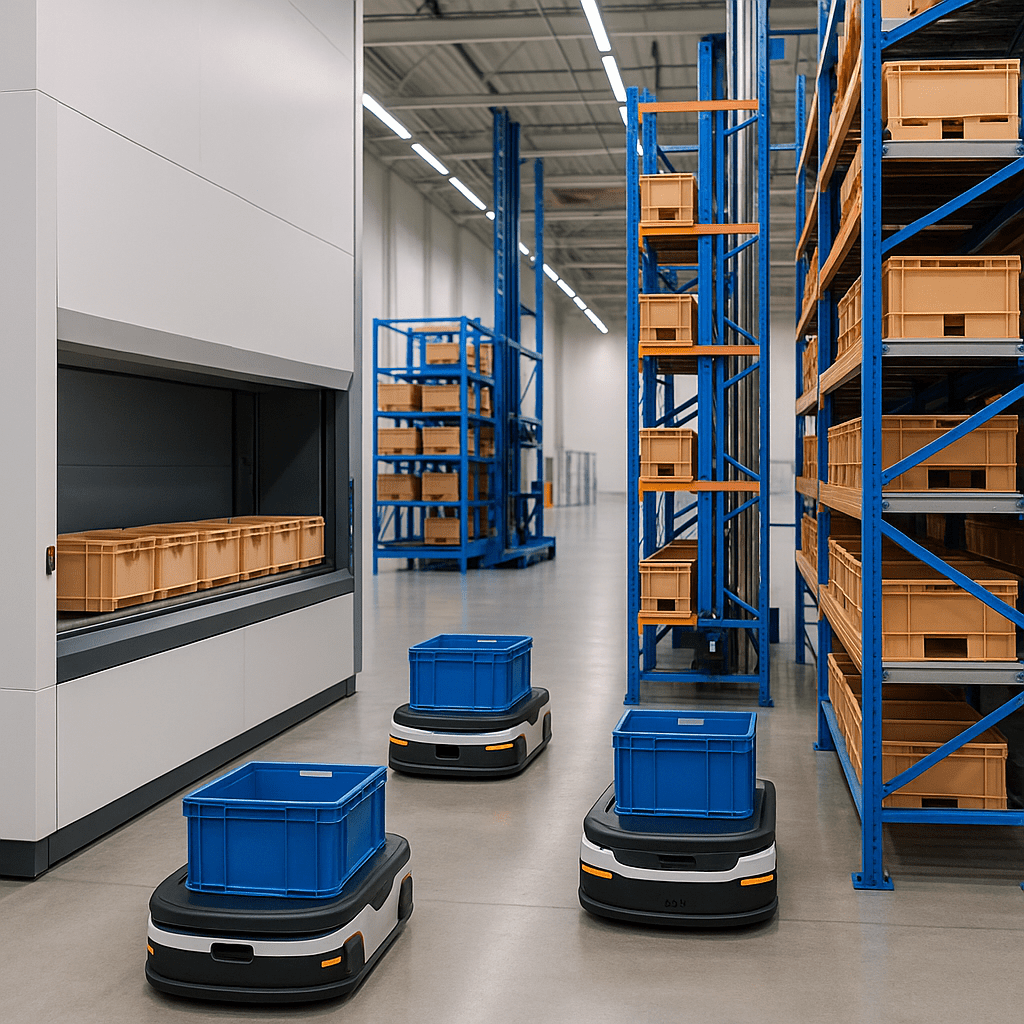
Manual operations do not scale efficiently. Adding more shifts, hiring more workers, and expanding the building are expensive, slow, and unpredictable.
Automated systems scale seamlessly. Need more throughput? Add another picking station. Need more storage? Expand your AS/RS aisles or upgrade your VLM modules. Need more material flow? Add more AMRs to the fleet.
This modular, flexible scalability allows businesses to:
Handle rapid growth
Meet higher order volumes
Add new product lines
Respond to market changes
Expand without major construction
Automation gives your warehouse room to grow without dramatically increasing cost.
Explore scalable AS/RS solutions:
🔗 https://verticalstorageusa.com/automated-storage-and-retrieval-systems/
Frequently Asked Questions (FAQ’s)
What are the immediate benefits of warehouse automation?
Warehouse automation delivers day-one benefits such as reduced labor costs, faster picking, improved accuracy, safer workflows, and real-time inventory visibility without long adjustment periods.
How quickly does warehouse automation improve productivity?
Most warehouses see productivity improvements immediately after go-live, with picking speeds increasing 2×–5× depending on the automation technology and workflow design.
Does warehouse automation reduce labor requirements right away?
Yes. Automation eliminates walking, searching, and manual transport, allowing facilities to handle more volume with fewer labor hours from the first day of operation.
How does automation improve accuracy compared to manual warehouses?
Automated systems use software-directed picking, barcode validation, and controlled access, reducing mis-picks and enabling accuracy rates of 99% or higher.
Conclusion: The Benefits of an Automated Warehouse Begin on Day One
The benefits of warehouse automation are immediate, measurable, and transformative. From reduced labor costs and improved accuracy to reclaimed floor space and safer operations, automation delivers value the moment the system turns on. Over time, these benefits only grow as data accumulates, workflows become more refined, and the warehouse scales with confidence.
Whether you begin with a single automated storage system or invest in a full goods-to-person or AS/RS solution, automation will reshape your warehouse in powerful and lasting ways—starting on day one.