Warehouse automation decisions are rarely simple. When operations leaders begin evaluating automation, the conversation often narrows to one major question:
Should we install a Vertical Lift Module (VLM), or do we need a full Automated Storage and Retrieval System (ASRS)?
Both technologies improve storage density, reduce labor reliance, and increase inventory control. But they are built for very different operational demands.
If you’re researching VLM vs ASRS, this guide will walk you through the real differences — not just technical definitions, but how each solution impacts space utilization, throughput, scalability, and long-term ROI.
Understanding the Foundation: What Is a VLM?
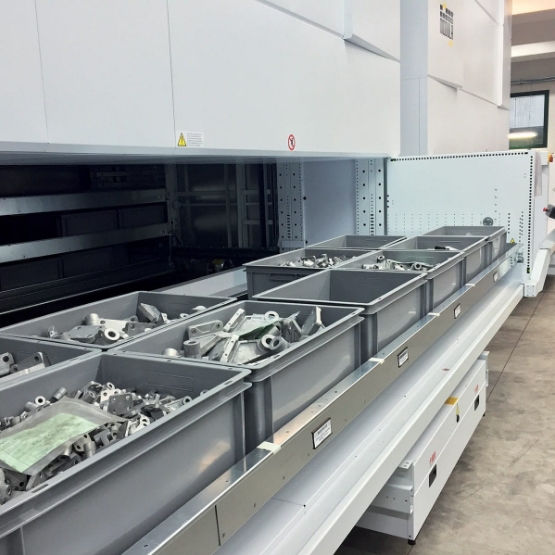
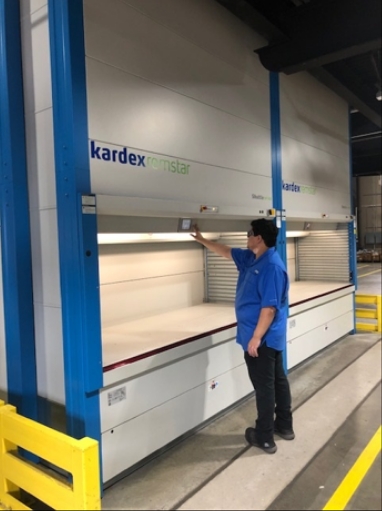
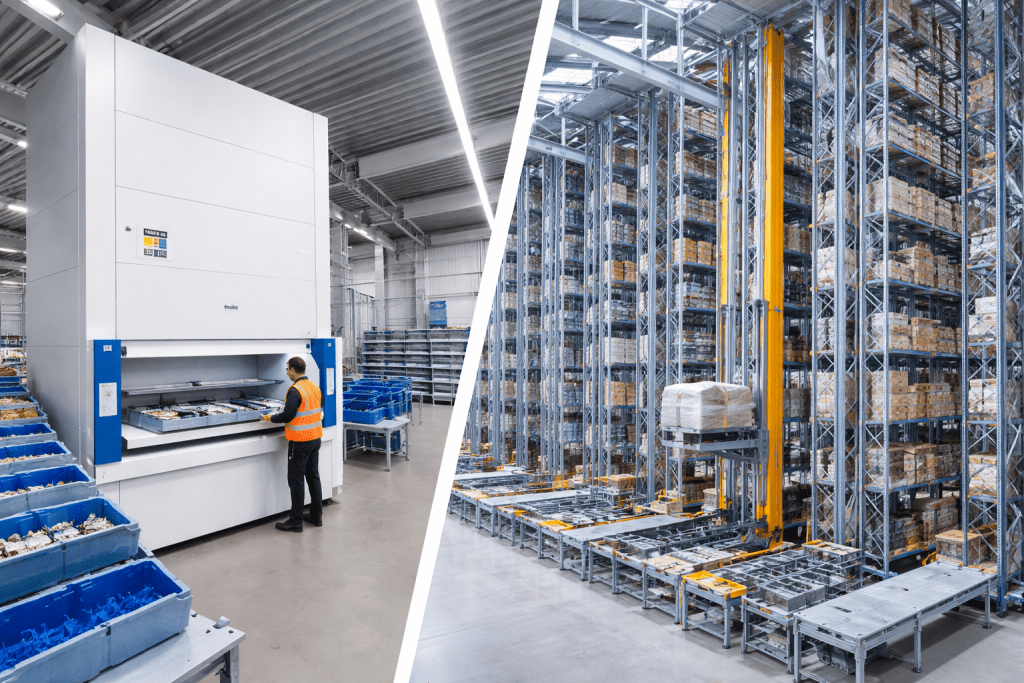
A Vertical Lift Module is a self-contained automated storage system designed to store trays vertically inside an enclosed cabinet. When an operator requests an item, an internal extractor retrieves the correct tray and delivers it to an ergonomic access window.
Rather than requiring employees to walk through aisles searching for parts, the system brings inventory directly to them. This goods-to-person principle eliminates wasted motion while maximizing vertical ceiling space that would otherwise remain unused.
VLMs are particularly effective in environments with high SKU counts, controlled parts inventory, and limited floor space. Manufacturing facilities, aerospace operations, MRO departments, and parts distribution centers often rely on VLMs to increase organization and improve picking accuracy.
Because they reclaim unused airspace and reduce labor movement, many facilities achieve measurable ROI in 12 to 18 months.
What Is an ASRS?
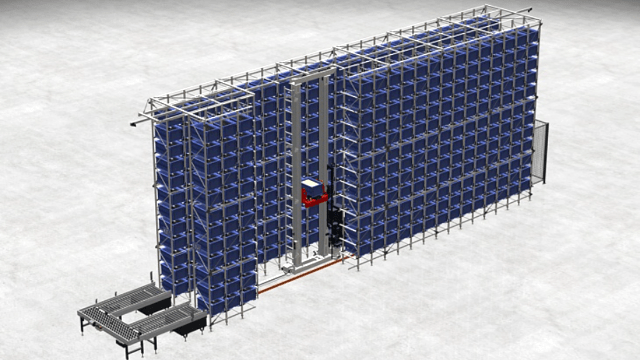
An Automated Storage and Retrieval System, or ASRS, is a broader category of automation that uses cranes, shuttles, robotics, or extractors to move inventory automatically within engineered racking structures.
Unlike a VLM, which is typically a standalone vertical cabinet, an ASRS is usually designed as part of a larger warehouse infrastructure. It can manage pallets, cartons, totes, or heavy loads at significant scale and speed.
ASRS systems are commonly installed in high-volume distribution centers or facilities undergoing full automation initiatives. They are built for throughput. In the right environment, they can move hundreds of pallet loads per hour while integrating directly with warehouse management systems.
Where a VLM is often installed to solve a specific storage inefficiency, an ASRS is frequently implemented as part of a broader warehouse redesign or expansion strategy.
VLM vs ASRS: The Real Differences
At a high level, both systems improve density and reduce labor. The difference lies in scope, scale, and purpose.
1. Inventory Type
The most important distinction in any automated storage comparison is what you’re storing.
A VLM excels at organizing small to mid-sized items such as tools, parts, components, and boxed inventory. It thrives in high-SKU environments where accuracy and organization matter more than bulk movement.
An ASRS, on the other hand, is typically engineered for pallets or high-volume tote flow. If your operation revolves around large pallet loads moving continuously through inbound and outbound channels, ASRS becomes more relevant.
In short, VLM optimizes precision parts storage. ASRS optimizes large-scale material flow.
2. Footprint and Space Utilization
Both systems increase density, but they do it differently.
A VLM uses vertical cabinet storage to eliminate traditional shelving rows. It often replaces wide aisles and bin systems while fitting along existing walls. Many facilities reclaim hundreds or even thousands of square feet without changing their building footprint.
An ASRS restructures the warehouse layout entirely. It reduces forklift aisles, increases rack height, and often becomes the backbone of the facility’s storage infrastructure. The space gains can be dramatic, but they typically require more structural planning and engineering.
If your goal is reclaiming floor space within your current building quickly, a VLM often delivers faster and simpler results. If you’re building a high-bay distribution center from the ground up, ASRS may be the stronger strategic move.
3. Throughput and Speed
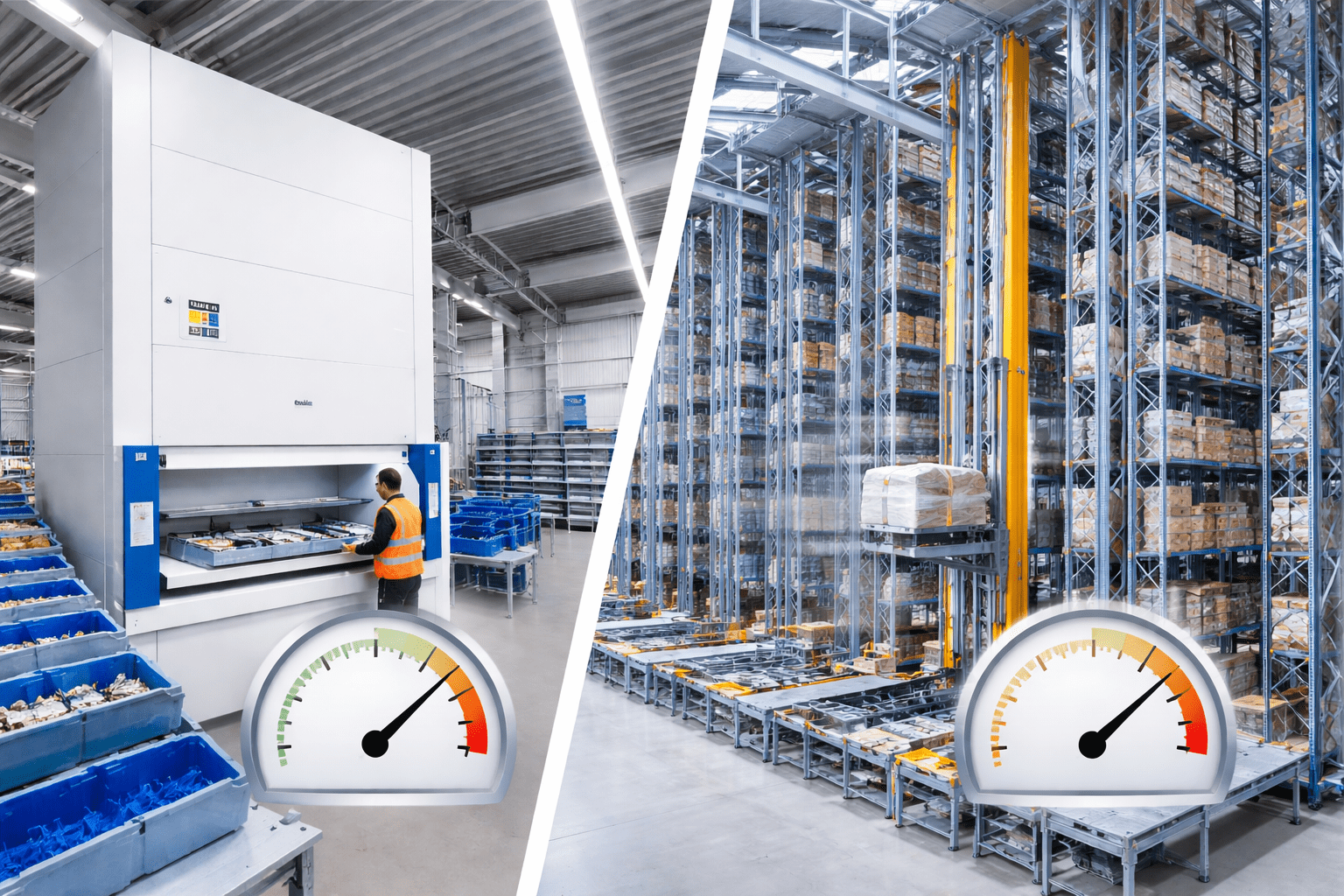
Throughput is where the conversation becomes more nuanced.
VLMs significantly increase picking speed by eliminating walking time. Operators remain stationary while trays are delivered automatically. For facilities focused on parts picking, this creates meaningful productivity improvements.
ASRS systems, however, are built for volume movement. In pallet-intensive environments, they outperform manual operations by wide margins. High-speed cranes and shuttle systems can process pallet movements at a scale far beyond what manual forklift traffic can sustain.
If your operation measures success in picks per hour of small components, VLM may be ideal. If you measure success in pallet throughput across multiple shifts, ASRS is often necessary.
4. Investment and Implementation
Cost is often the deciding factor when comparing VLM vs ASRS.
A VLM typically requires a lower upfront investment and shorter installation timeline. It can often be added into an existing operation without halting production. Many facilities begin their automation journey with one or two units and expand modularly over time.
An ASRS system represents a larger capital commitment. It requires engineered racking, integration with WMS, and more extensive installation planning. Implementation timelines are longer, and planning phases are more detailed.
For mid-sized manufacturers or operations testing automation for the first time, a VLM often provides an accessible entry point. For enterprise-level distribution centers, ASRS may align better with long-term automation strategies.
5. Scalability and Long-Term Strategy
Scalability differs in approach.
VLM systems scale horizontally by adding additional modules. If growth increases SKU count or picking demand, another unit can be installed alongside the original.
ASRS systems scale structurally. Expansion may involve additional aisles, cranes, or shuttle lanes built into the engineered rack system.
The choice often comes down to whether you’re optimizing a department or redesigning an entire warehouse ecosystem.
When a VLM Is the Right Choice
A VLM tends to be the better solution when space is tight, SKU count is high, and picking accuracy is critical. Facilities that store maintenance parts, aerospace components, tooling, or medical inventory often benefit immediately from vertical cabinet automation.
Organizations that want faster ROI and minimal operational disruption also gravitate toward VLM installations. They offer meaningful efficiency improvements without requiring a full facility overhaul.
When ASRS Makes More Sense
ASRS becomes the stronger choice when pallet flow is central to the business model. Large distribution centers, e-commerce fulfillment hubs, and high-volume logistics operations rely on pallet automation to eliminate forklift congestion and maximize throughput.
If the strategic goal is full warehouse automation, including conveyor integration and advanced WMS control, ASRS systems are designed for that level of complexity.
Can VLM and ASRS Work Together?
Absolutely.
Many modern facilities implement hybrid automation strategies. A VLM may manage small parts storage while an ASRS handles pallet loads. Both systems can integrate into a shared warehouse management platform, delivering precision at the SKU level and power at the pallet level.
In fact, hybrid strategies often produce the strongest overall performance because each system handles what it does best.
Final Thoughts: Choosing Between VLM vs ASRS
The decision ultimately comes down to operational priorities.
If you’re solving a parts storage problem, reclaiming floor space, and increasing picking efficiency, a VLM is often the right move.
If you’re redesigning warehouse flow, automating pallet handling, and scaling throughput across an entire facility, ASRS may be the better investment.
The best decision is rarely made by looking at technology alone. It requires evaluating inventory type, growth projections, ceiling height, labor costs, and capital strategy.
Automation should align with operational goals — not just industry trends.
Ready to Evaluate Your Facility?
If you’re weighing VLM vs ASRS, the next step is a facility assessment.
At Vertical Storage USA, we help operations teams model space savings, throughput improvements, and ROI projections before any investment is made. Whether the right answer is a Vertical Lift Module, an ASRS, or a hybrid approach, the goal is the same: maximize density, improve efficiency, and delay costly expansion.
Request a consultation to determine which automation strategy fits your operation.