Vertical storage systems promise to transform warehouse operations by maximizing space utilization, reducing labor costs, and improving inventory accuracy. Yet many businesses fail to realize these benefits because they make critical mistakes during implementation. Understanding these pitfalls-and how to avoid them-can mean the difference between a successful deployment and a costly operational disruption.
Whether you’re upgrading your warehouse with vertical lift modules (VLMs), installing tall shelving systems, or implementing automated retrieval solutions, this guide walks you through the most common implementation errors and provides actionable strategies to prevent them.
Rushing Implementation Without Proper Planning
The most frequent mistake businesses make is moving forward without a thorough assessment of their current operations and future needs. Many companies view vertical storage as a straightforward upgrade-install the equipment and watch productivity soar. In reality, successful implementation requires methodical planning that begins long before any equipment arrives at your facility.
What goes wrong: Companies skip the planning phase to save time and money, only to discover that their chosen system doesn’t align with their workflow, inventory characteristics, or facility constraints. This leads to underutilized equipment, operational bottlenecks, and wasted capital investment.
How to avoid it: Start by conducting a comprehensive analysis of your current inventory. Before loading a single item into your new system, organize and count your existing stock. This step is time-consuming but essential-it ensures a smoother transition and prevents errors during the migration process.
Next, evaluate your warehouse space thoroughly. Measure your available floor space and vertical clearance, understand your facility’s layout and dimensions, and identify any structural limitations. An engineering assessment during the planning phase helps address construction constraints and ensures compliance with safety standards.
Finally, analyze how materials move through your facility from receiving to shipping. Identify bottlenecks, inefficiencies, and workflow patterns that your vertical storage system must support.
Treating Vertical Storage Like Static Shelving
One of the biggest conceptual mistakes is approaching vertical storage systems-especially automated ones like VLMs-as if they were traditional warehouse racking. This mindset leads to micromanagement, wasted space, and significant underutilization of the system’s capabilities.
What goes wrong: When operators try to recreate their old static shelving layout inside an automated system, they often dictate exactly where every item should go. This approach ignores the system’s intelligent design and software capabilities, resulting in inefficient picking routes, reduced storage density, and poor return on investment.
How to avoid it: Recognize that automated vertical storage systems are designed to do the thinking for you. Instead of micromanaging inventory locations, use the system’s software to assign locations based on rules and categories you establish. Trust the system to optimize placement within those parameters.
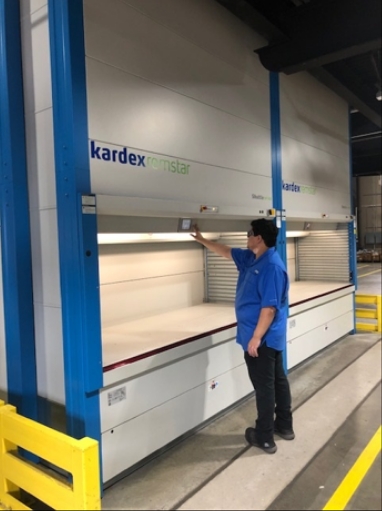
For example, if you’re implementing a VLM, organize your inventory by height rather than by product type. VLMs equipped with smart sensor technology measure shelf height and find optimal placement automatically. Grouping similarly-sized items together allows the system to store trays more compactly and increase overall storage density.
Ignoring Workflow Integration
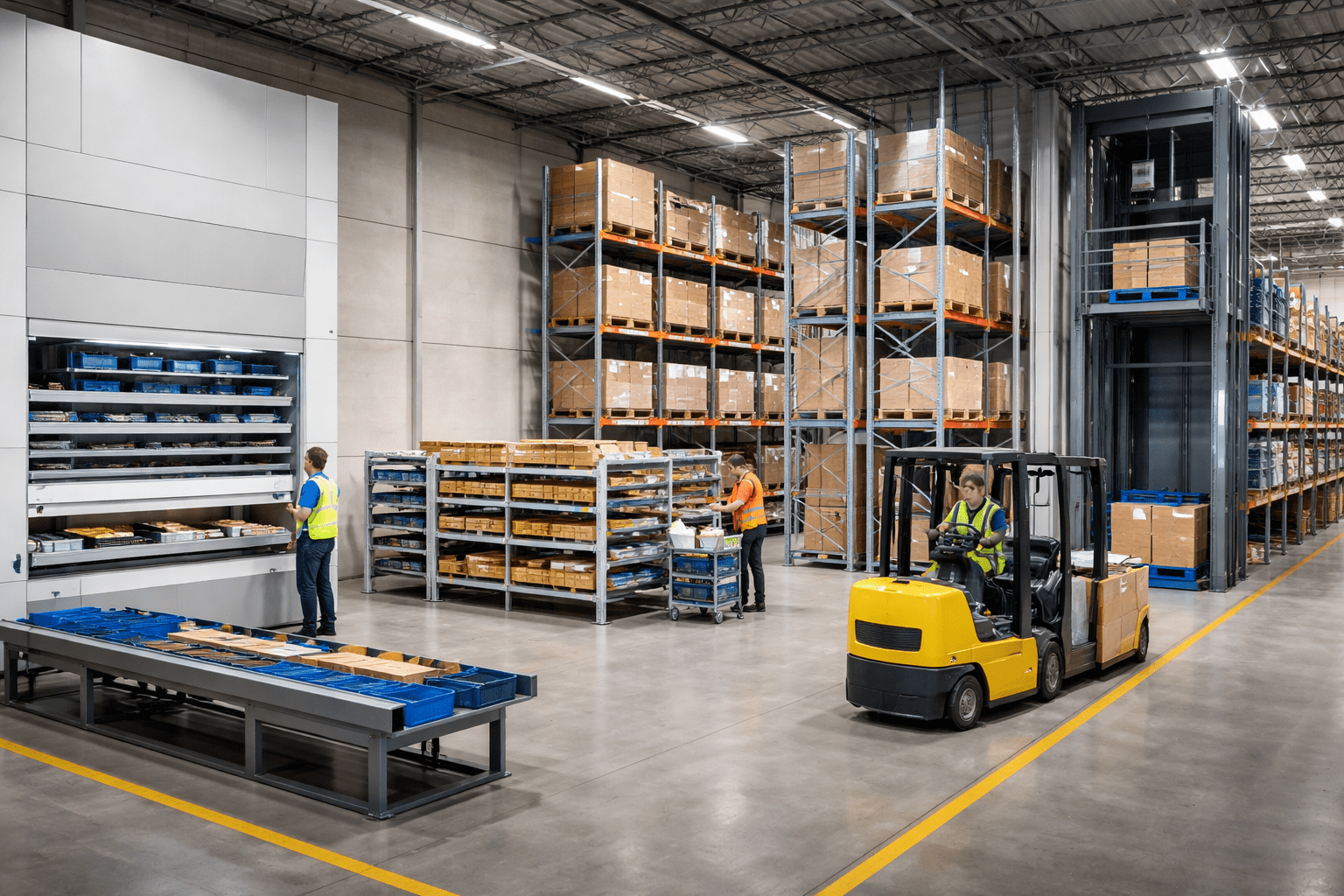
Vertical storage isn’t just about adding height to your warehouse-it’s about seamlessly integrating new systems into your existing operations. Many businesses implement vertical solutions that conflict with their current workflows, creating friction rather than efficiency.
What goes wrong: A company installs a vertical carousel system designed for small parts, but their primary workflow involves handling large, bulky containers. Or they implement a solution that requires operators to wait for automated retrieval, creating idle time rather than reducing it.
How to avoid it: Before selecting equipment, ask critical questions about your operation:
- Are the stored items uniform in size?
- How frequently are items accessed?
- Are any items sensitive to temperature, humidity, or light?
- How many access points are needed?
- How will inventory be tracked?
Match your vertical storage solution to your specific workflow. If you’re dealing with palletized goods, traditional forklifts may be sufficient. However, if you’re moving large individual items or bulky containers, a Vertical Reciprocating Conveyor (VRC) may provide better utility. For manually handled materials stored vertically, flow racks (gravity flow racks) can feed products to pickers in an intuitive, efficient way.
Overlooking Structural and Safety Requirements
Vertical storage systems place significant demands on your facility’s structure. Ignoring these requirements can lead to safety hazards, equipment damage, and costly repairs.
What goes wrong: Companies install high-density shelving or pallet racks without ensuring their building can support the load-bearing requirements. Over time, this can result in structural stress, shelf collapse, and worker injuries.
How to avoid it: Before implementation, conduct a thorough structural assessment. Vertical storage systems require sound architectural design to support load-bearing requirements. Work with engineers to evaluate your facility’s capacity and identify any reinforcement needed.
Pay special attention to weight distribution. Place heavy items on lower shelves, use reinforced shelving where necessary, and distribute weight evenly across storage units. Install proper wall anchors and consider pull-out systems for heavy items to protect both your inventory and your storage infrastructure.
Failing to Train Staff Adequately
Even the most sophisticated vertical storage system will underperform if your team doesn’t understand how to use it effectively. Inadequate training is a silent killer of ROI.
What goes wrong: Employees operate equipment incorrectly, misuse the warehouse management system (WMS), and make picking errors because they lack proper training. This leads to slower pick rates, higher error rates, and safety incidents.
How to avoid it: Invest in comprehensive staff training before your system goes live. Employees must be trained on:
- Safe operation of all equipment, including forklifts, order pickers, and automated systems
- Proper lifting techniques and material handling procedures
- Emergency protocols
- How to use the WMS or inventory management software
- Best practices for handling inventory within the new system
Training should be ongoing, not a one-time event. As your team learns how the system flows and identifies optimization opportunities, continue to refine their skills and knowledge.
Neglecting Battery Room Optimization
If your vertical storage system relies on forklifts or lift trucks, the efficiency of your battery room directly impacts your warehouse’s overall throughput. This often-overlooked area can become a bottleneck.
What goes wrong: Battery rooms are treated as an afterthought, with batteries stored inefficiently on the floor or in disorganized stacks. When lift trucks need charging, operators waste time searching for available batteries or waiting for charged units.
How to avoid it: Apply vertical storage principles to your battery room. Battery racks can be stacked vertically to maximize storage density, then swapped out quickly with Operator Aboard Battery Extractors. This ensures your lift trucks remain charged and ready, maintaining consistent warehouse throughput.
Micromanaging Inventory Locations
While some level of organization is necessary, excessive micromanagement of where items are stored within your vertical system creates inefficiency and prevents the system from optimizing itself.
What goes wrong: Managers insist on assigning permanent “forever homes” to every SKU before the system has even begun operating. As inventory levels shift and order patterns change, these rigid assignments become obsolete, wasting valuable space and creating picking inefficiencies.
How to avoid it: Use temporary or multiple storage locations, especially during the initial onboarding phase. This approach allows your team to adapt to real-time conditions while the system learns your inventory patterns.
During the first few weeks of operation, let your team focus on learning the software and understanding how parts flow through the system. Rather than spending hours slotting every SKU into a permanent location, store items wherever there’s space and let the system track those locations. Once you’ve gathered sufficient data about velocity and stocking patterns, use that information to optimize placement.
Consider these strategies:
- Store related SKUs together if they’re frequently picked together (kits, assemblies, or bundled parts)
- Stage fast-movers near the VLM access point for quicker retrieval
- Use multiple locations to buffer overflow stock during large shipments
- Support parallel workflows by preventing one task from blocking another
Failing to Monitor and Adjust Performance
Vertical storage systems aren’t “set it and forget it” solutions. Without ongoing monitoring and optimization, performance degrades over time.
What goes wrong: Companies implement their system, celebrate the initial improvements, and then neglect to monitor key performance indicators (KPIs). Gradually, pick rates slow, errors increase, and the system becomes less efficient than it was months earlier.
How to avoid it: Establish a regular review schedule and monitor these warning signs:
- Pick rates are slowing down
- You’re running out of space
- Inventory has changed (new SKUs, discontinued items, different stocking levels)
- You’re seeing more errors or mis-picks
When you notice these signs, reorganize your system proactively. Move fast-movers closer to access points, adjust bin sizing, or update your slotting strategy based on current inventory patterns. Small, ongoing improvements prevent major inefficiencies from developing.
Inadequate Space Analysis Before Implementation
Many businesses implement vertical storage without fully understanding their current space utilization or future growth needs.
What goes wrong: A company installs a system sized for their current inventory, only to find it’s inadequate within 18 months. Alternatively, they over-invest in capacity they’ll never use, tying up capital unnecessarily.
How to avoid it: Conduct a thorough space analysis before selecting your system. According to industry standards, about 22-27% of total available floor space should be reserved for storage. As your business grows, keeping utilization within these numbers becomes increasingly difficult-which is precisely why vertical storage becomes necessary.
Evaluate not just your current needs but your projected growth over the next 3-5 years. Consider seasonal fluctuations, new product lines, and market expansion plans. This analysis ensures you select a system that meets both immediate and future requirements.
Choosing the Wrong Equipment for Your Needs
Not all vertical storage solutions are created equal. Selecting equipment that doesn’t match your specific inventory and operational requirements is a costly mistake.
What goes wrong: A company invests in a vertical carousel system designed for small parts, but their primary inventory consists of large, heavy items. Or they choose a solution that’s too complex for their operation, leading to underutilization and frustration.
How to avoid it: Evaluate your inventory characteristics carefully before selecting equipment. Consider:
- Item size and weight
- Frequency of access
- Load capacity requirements
- Retrieval speed needs
- Integration capabilities with your existing WMS
Different solutions serve different purposes. Vertical lift modules excel at high-density storage of small to medium parts. Vertical carousels work well for smaller items with frequent access. Tall shelving units suit operations with less frequent access and simpler workflows. Mezzanine floors create additional floor space for operations requiring horizontal expansion alongside vertical optimization.
Not Accounting for System Flexibility
Rigid systems that can’t adapt to changing business needs become liabilities rather than assets.
What goes wrong: A company implements a system with fixed configurations that can’t accommodate new SKUs, changing order patterns, or evolving business requirements. Within a year, the system feels constraining rather than enabling.
How to avoid it: Choose systems and implementation strategies that allow flexibility. Adjustable shelves, modular configurations, and software that supports rule-based rather than fixed assignments all provide the adaptability modern businesses need.
Treat your entire vertical storage system as a single location within your warehouse management system. This simplification allows you to adjust internal organization without constantly updating your WMS, making the system more responsive to change.
Frequently Asked Questions
What are the most common mistakes when implementing vertical storage?
The most common mistakes include poor upfront planning, choosing the wrong equipment, ignoring workflow integration, insufficient staff training, and failing to monitor performance after go-live.
Why is planning so important before installing vertical storage systems?
Vertical storage impacts layout, workflows, safety, and inventory flow. Without proper planning, systems can be underutilized, create bottlenecks, or fail to support future growth.
How is vertical storage different from traditional static shelving?
Vertical storage systems are dynamic and software-driven. Unlike static shelving, they optimize item placement automatically, reduce travel time, and adapt to changing inventory patterns.
What happens if vertical storage is not aligned with warehouse workflows?
Poor workflow alignment can lead to operator idle time, congestion, slower picking, and reduced throughput—negating the efficiency gains vertical storage is designed to deliver
Moving Forward With Confidence
Implementing vertical storage successfully requires more than purchasing equipment-it demands careful planning, realistic expectations, and ongoing commitment to optimization. By avoiding these common mistakes, you position your business to realize the full benefits of vertical storage: increased capacity, improved efficiency, reduced labor costs, and better inventory accuracy.
The key is to approach implementation methodically. Start with thorough analysis, choose equipment that matches your specific needs, train your team comprehensively, and commit to ongoing monitoring and adjustment. When you do, vertical storage becomes a powerful competitive advantage rather than an expensive disappointment.
Ready to transform your warehouse operations? Vertical Storage USA specializes in helping businesses implement vertical storage solutions that actually work. Our team can guide you through the planning process, help you avoid these common pitfalls, and ensure your system delivers measurable results from day one.