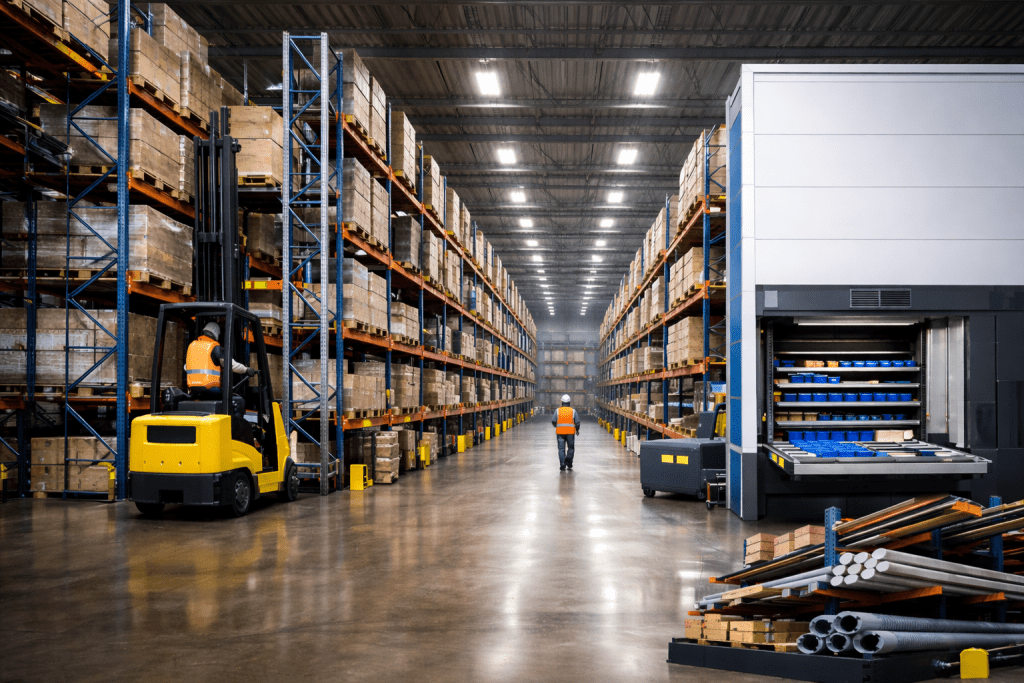
Warehouse operators face a persistent challenge: limited floor space amid growing inventory demands. Vertical racking solutions transform underutilized overhead areas into high-capacity storage, potentially increasing density by 40-50% without expanding your footprint, as seen in high-density systems like narrow aisle racking. This guide explores proven strategies, system types, and 2026 trends to help you reclaim space, boost efficiency, and cut costs-drawing from real-world implementations and expert insights.
Understanding Vertical Racking and Its Core Advantages
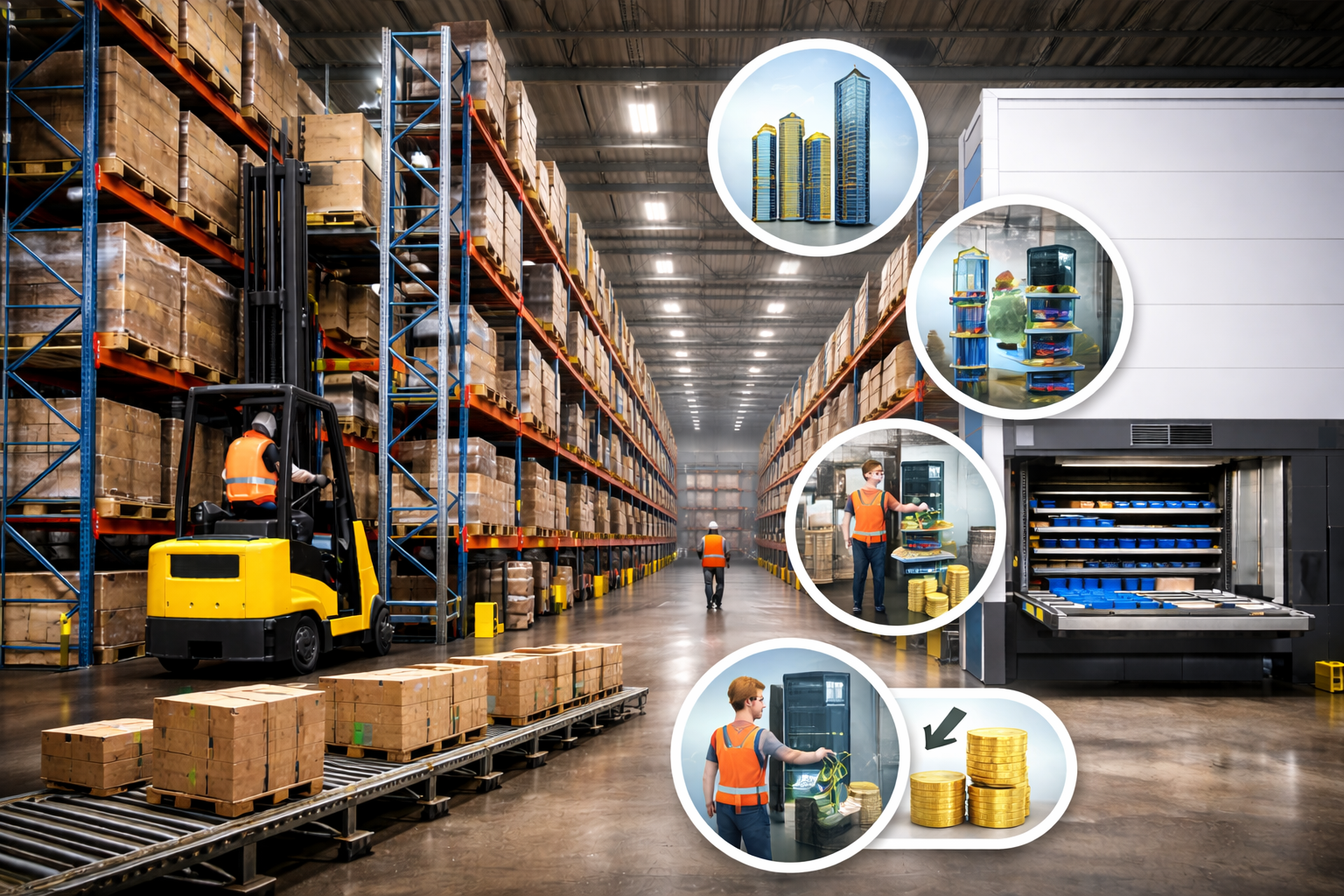
Vertical racking leverages a warehouse’s ceiling height to stack inventory upward, freeing floor space for operations like picking, packing, or automation integration. Unlike traditional horizontal shelving, these systems prioritize cubic utilization, turning “dead air” above head height into productive storage.
Businesses adopting vertical solutions report measurable gains. For instance, vertical storage systems can double or triple capacity in facilities with high ceilings, while reducing picker travel time by up to 45% through automated delivery to ergonomic heights. In e-commerce and manufacturing, this translates to faster order fulfillment and lower real estate costs, especially critical as urban warehouses shrink amid 2026 supply chain pressures.
Key advantages include:
- Space maximization: Capitalize on vertical space to store 35-50% more long goods or pallets compared to floor stacking.
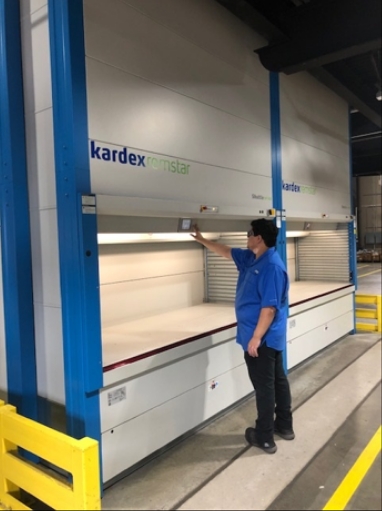
- Improved accessibility: Systems like vertical lift modules (VLMs) bring items directly to operators, minimizing search time and errors.
- Enhanced safety: Reduced clutter and ergonomic access cut injury risks from climbing or bending.
- Cost savings: Avoid expansion by optimizing existing layouts, with ROI from labor reductions and higher throughput.
At Vertical Storage USA, we specialize in these systems tailored for high-SKU environments, integrating seamlessly with AI-driven warehouse management for optimal results.
Types of Vertical Racking Systems for Maximum Efficiency
Selecting the right vertical racking depends on your inventory type, turnover rate, and equipment. Here’s a breakdown of top systems, updated for 2026 innovations like AI integration and seismic-resistant designs.
Selective and Narrow Aisle Racking
Selective pallet racking offers 100% accessibility for first-in, first-out (FIFO) needs, with narrow aisle variants shrinking pathways to boost storage by up to 40%. Ideal for diverse SKUs, these use reach trucks or very narrow aisle (VNA) forklifts.
- Benefits: High selectivity; easy stock visibility.
- 2026 Update: AI-optimized slotting adjusts layouts dynamically.
Double-Deep and Push-Back Racking
Double-deep racking stores pallets two-deep, doubling capacity in the same footprint, while push-back systems use gravity-fed carts for last-in, first-out (LIFO) efficiency. Push-back racks minimize aisles, fitting more in tight spaces.
- Capacity gain: Up to 4x with back-to-back setups.
- Drawbacks: Reduced front pallet access; best for medium-turnover items.
- Safety feature: 2026 models include automated brakes.
Drive-In/Drive-Through and Pallet Flow Racking
Drive-in racking lets forklifts enter the structure for dense LIFO storage of uniform pallets, reducing aisles significantly. Drive-through supports FIFO, and pallet flow uses rollers for gravity-fed high-throughput.
- Density: Maximum for bulk, homogeneous goods.
- 2026 Trend: AI collision prevention enhances safety.
Cantilever Racking for Long or Bulky Items
Cantilever racking excels with lumber, pipes, or steel-arms extend without front posts for unrestricted access. It increases density 35-50% over floor stacking.
- Structure: Adjustable arms on braced uprights; straight for lumber, inclined for rounds.
- Case example: A steel distributor cut pick times 42% and damage 76% post-installation.
Automated Vertical Solutions: VLMs and Carousels
Vertical lift modules (VLMs) and vertical carousels automate retrieval, delivering trays to operators-perfect for small parts or high-value items. Micro-fulfillment centers see 200-300% capacity boosts.
- Integration: Links to WMS/ERP for real-time tracking; 4-6 software options available.
- Industries: E-commerce, pharma, manufacturing.
| System Type | Best For | Density Increase | Access Type | 2026 Innovation |
|---|---|---|---|---|
| Narrow Aisle | Diverse SKUs | Up to 40% | FIFO/Selective | AI slotting |
| Push-Back | Medium turnover | 2-4x pallets | LIFO | Auto-brakes |
| Cantilever | Long goods | 35-50% | 100% selective | Seismic upgrades |
| VLMs/Carousels | Small parts | 200-300% | Automated | Predictive AI |
Vertical Storage USA customizes these for seamless scalability, from mezzanines to full AS/RS.
Step-by-Step Implementation Guide
Implementing vertical racking requires planning to ensure safety and ROI. Follow these steps for success.
- Assess Your Space: Measure ceiling height, floor load capacity, and layout. Tools like digital twins simulate gains-early adopters report 15-30% better utilization.
- Inventory Audit: Classify SKUs by size, turnover, and weight. Match to system (e.g., cantilever for bulky).
- Equipment Check: Ensure forklifts or VNA trucks fit; consider automation for heights over 20 feet.
- Design and Install: Comply with standards like seismic ratings and SWL signage. Use anti-collapse mesh.
- Integrate Software: Link to WMS for tracking; AI predicts replenishment.
- Train and Maintain: Staff training reduces errors; annual inspections prevent failures.
Budget tip: Initial costs offset by 20-40% labor savings within 12-18 months.
Safety and Compliance in Vertical Racking
Tall racks demand rigorous safety. Key protocols:
- Structural Integrity: Seismic bracing, load limits via SWL signs.
- Access Controls: Bollards, barriers, ergonomic delivery.
- Training: Height protocols, forklift certification.
- Inspections: Monthly in-house, annual expert checks.
Vertical systems cut injuries by minimizing climbs-zero incidents reported in a 24-month cantilever case.
Industry Applications and Real-World Case Studies
Vertical racking adapts across sectors.
- E-commerce: VLMs handle high-turnover fashion/electronics; AI pre-positions for same-day delivery.
- Manufacturing: Organize tools/parts; 42% faster picks.
- Pharma/Healthcare: Secure, hygienic storage for meds/tools.
- Distribution: Mouser Electronics installed 100+ VLMs, slashing travel 45% and boosting accuracy to 99%.
A lumber facility using cantilever retained 3,000 sq ft footprint but added 38% capacity, with zero safety issues.
2026 Trends Shaping Vertical Racking
As of 2026, warehouses evolve with:
- AI and IoT: Real-time tracking, 72% mispick reduction.
- Robotics Integration: AGVs pair with VLMs for zero-touch ops.
- Sustainable Materials: Recycled racks; modular for scalability.
- Micro-Fulfillment: Compact AS/RS for urban density.
Vertical Storage USA leads with AI-ready VLMs, preparing clients for these shifts.
Unlock Your Warehouse Potential Today
Vertical racking solutions deliver immediate space gains, efficiency boosts, and future-proof operations-proven across industries with data-backed results. Assess your layout now and explore customized options to stay ahead. Contact Vertical Storage USA for a free consultation and start maximizing your vertical advantage.