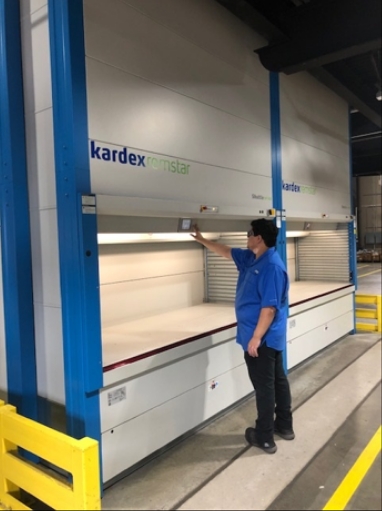
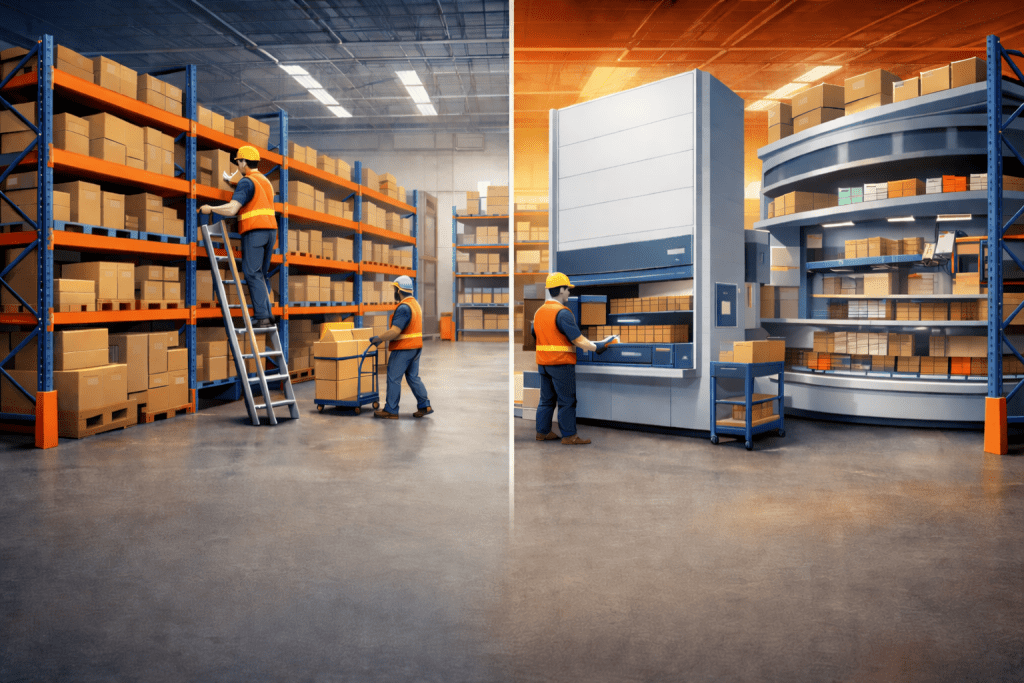
Warehouse shelving has long been the backbone of storage in distribution centers, manufacturing facilities, and stockrooms of all sizes. From steel shelving units to wire and boltless systems, traditional warehouse shelving remains popular because it is affordable, familiar, and easy to deploy.
But today’s warehouses are under pressure. Labor is harder to find, floor space is more expensive, and SKU counts continue to rise. As a result, many operations are starting to question whether traditional shelving can still keep up — or whether automated shelving systems are the smarter long-term choice.
This guide compares traditional warehouse shelving and automated shelving systems through the lens of space utilization, labor efficiency, accuracy, scalability, and cost. The goal isn’t to replace shelving everywhere, but to understand when automation actually makes sense.
Understanding Traditional Warehouse Shelving
Traditional warehouse shelving refers to static storage systems that require workers to physically travel to inventory. Items are stored on fixed shelves arranged in rows or aisles, and picking is performed manually using carts, ladders, or forklifts depending on height and layout.
These systems are often part of broader racking and shelving systems, which may include pallet racking, bin shelving, or specialty storage. You can explore common configurations within warehouse racking and shelving systems and industrial shelving systems.
For many operations, this approach works well. It offers a low barrier to entry, minimal technical complexity, and straightforward installation. Shelving can also be reconfigured as inventory changes.
However, as operations scale, limitations begin to surface. Traditional shelving expands horizontally, consumes valuable floor space, and relies heavily on labor-intensive picking. As order volume increases, workers often spend more time walking and searching than actually picking.
What Defines an Automated Shelving System?
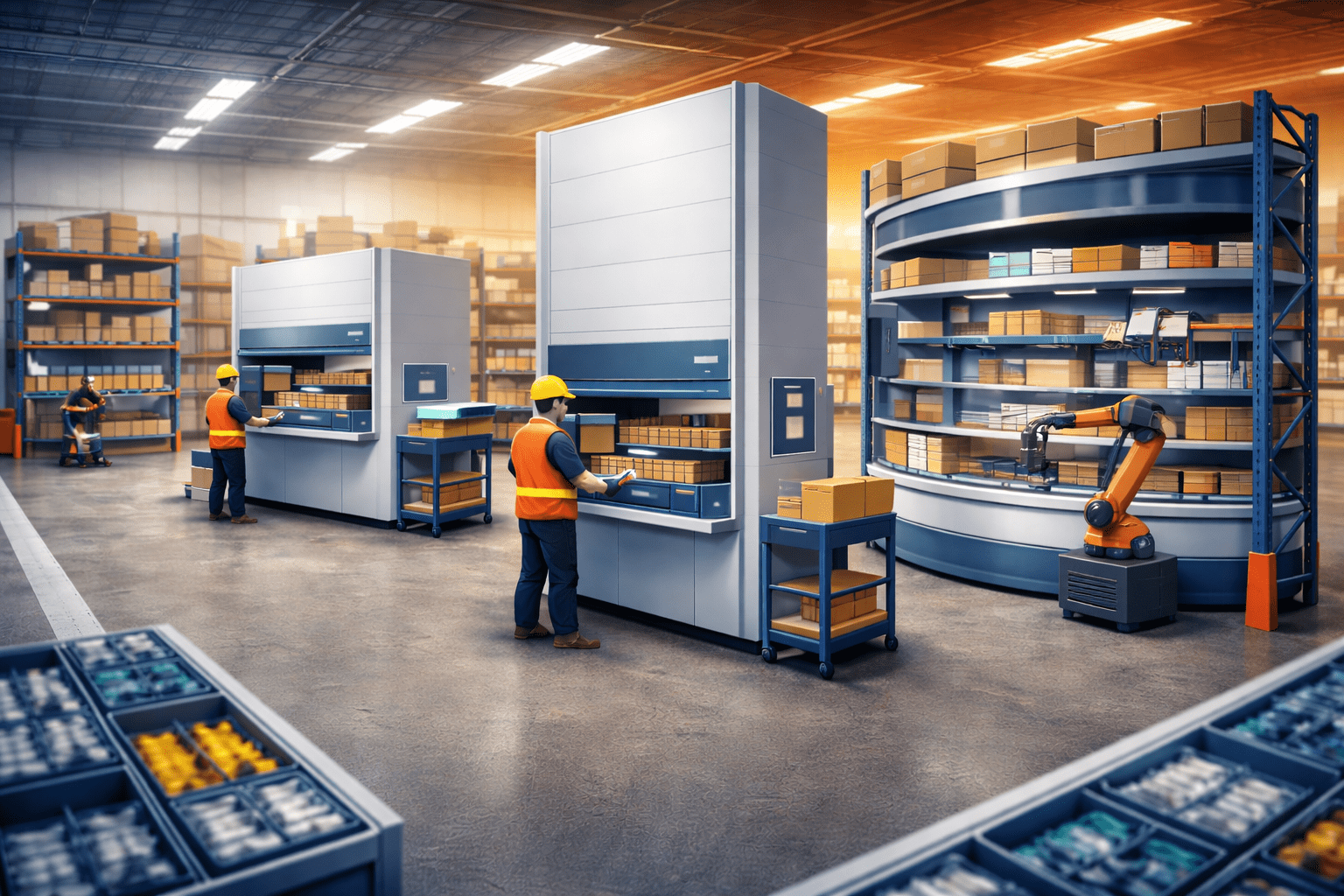
Automated shelving systems take a fundamentally different approach. Instead of people traveling to inventory, inventory is delivered directly to the operator using automated vertical or horizontal movement.
These systems fall under the broader category of automated storage solutions and typically include vertical lift modules, vertical carousels, and horizontal carousels. Rather than accessing multiple aisles, operators work at a fixed, ergonomic access point while the system retrieves the required items.
A deeper overview of these solutions is available in automatic shelving systems and inventory tracking.
Automated shelving is frequently paired with technologies such as pick-to-light systems and warehouse software to guide operators through each pick. In more advanced environments, these systems are also integrated into automated storage and retrieval systems (AS/RS) for end-to-end automation.
Space Utilization: Where Automation Creates the Biggest Impact
One of the clearest differences between traditional shelving and automated shelving systems is how each uses space.
Traditional shelving grows outward. As SKU counts increase, additional shelving rows are added, aisles widen, and floor space is consumed rapidly. In many warehouses, vertical clearance goes largely unused because accessing higher shelves becomes inefficient or unsafe.
Automated shelving systems reverse this model by storing inventory vertically. Solutions such as vertical lift modules and vertical carousels make it possible to use the full height of a facility, compressing storage into a much smaller footprint.
For space-constrained facilities, automation is often evaluated first as a space-recovery strategy rather than a productivity upgrade.
Labor Efficiency and Productivity Differences
Labor is often the most expensive and unpredictable variable in warehouse operations, and this is where the contrast between shelving approaches becomes more pronounced.
With traditional shelving, productivity is tied directly to walking distance. Pickers travel aisle to aisle, search for locations, and physically retrieve items. Over the course of a shift, this travel time adds up and limits throughput regardless of experience.
Automated shelving systems eliminate much of this inefficiency. Inventory is delivered directly to the operator, allowing them to focus entirely on picking and replenishment. Because operators remain in a fixed position, fatigue is reduced and productivity becomes more consistent across shifts.
This goods-to-person approach is a core principle behind modern automated warehousing solutions and broader warehouse optimization systems and technology strategies.
Accuracy and Inventory Control
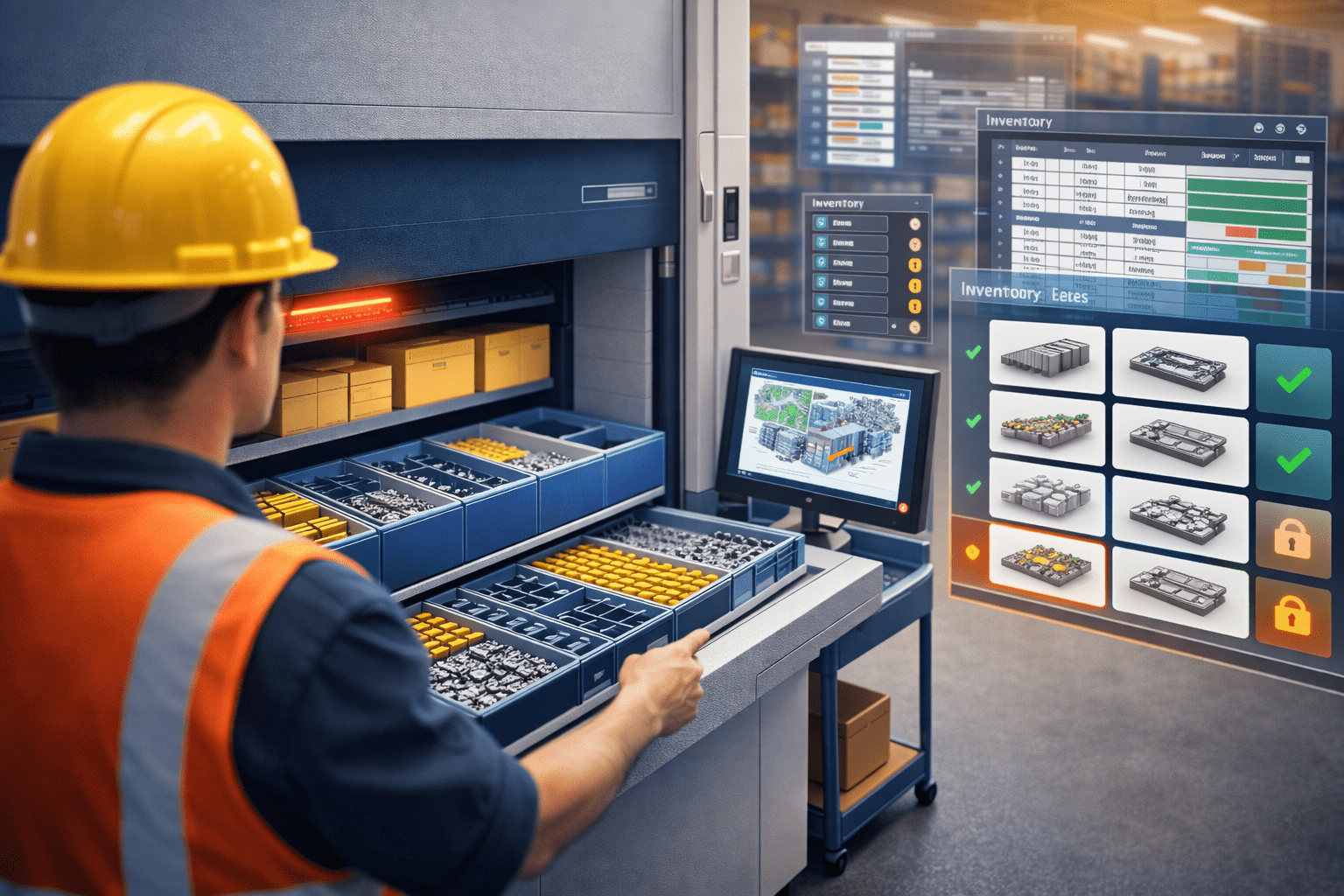
As inventory grows more complex, accuracy becomes harder to maintain in manual shelving environments. Similar parts, dense storage, and manual searching increase the risk of mis-picks and inventory discrepancies.
Automated shelving systems address this by pairing physical automation with software-directed picking. Items are presented in sequence, access can be restricted by role, and inventory is tracked in real time. When combined with inventory software, accuracy improves significantly.
This is especially valuable in environments that rely on precision, such as electronic parts storage or regulated industries that depend on strong inventory management storage solutions.
When Traditional Shelving Still Makes Sense
Despite its limitations, traditional warehouse shelving still plays an important role. It remains a practical choice for operations with low SKU counts, oversized items, minimal pick frequency, or abundant floor space.
Many facilities continue to rely on shelving alongside pallet racking systems or other manual storage solutions. In fact, hybrid layouts that combine shelving, racking, and selective automation are increasingly common.
When Automated Shelving Becomes the Smarter Choice
Automation typically becomes worth evaluating when multiple pressures converge. Facilities experiencing chronic space constraints, high labor turnover, growing SKU complexity, or increasing accuracy issues often reach a tipping point where shelving alone can no longer scale.
At that stage, automated shelving systems are usually part of a broader warehouse optimization effort that may include layout redesign, process improvement, and phased automation.
Cost Considerations: Beyond the Initial Investment
Traditional shelving generally carries a lower upfront cost, but it also locks operations into labor-heavy workflows. As volume grows, costs increase alongside headcount and floor space.
Automated shelving systems require a higher initial investment, but they reduce long-term operating costs by lowering labor dependency, improving accuracy, and delaying or eliminating facility expansion. Many organizations evaluate these systems using ROI rather than sticker price, often starting with tools like a warehouse automation ROI calculator or reviewing insights on the real ROI of a vertical lift module.
Frequently Asked Questions (FAQ’s)
What is the difference between traditional warehouse shelving and automated shelving systems?
Traditional shelving requires workers to travel to inventory, while automated shelving systems deliver items directly to the operator using vertical or horizontal automation.
When does automated shelving make more sense than traditional shelving?
Automation becomes more effective when space is limited, labor costs are rising, SKU counts are increasing, or accuracy and productivity issues limit scalability.
Is traditional warehouse shelving still relevant today?
Yes. Traditional shelving remains a practical solution for low-volume operations, oversized items, infrequent picking, or facilities with ample floor space.
How do automated shelving systems improve space utilization?
Automated shelving uses vertical height instead of floor space, allowing warehouses to store more inventory in a smaller footprint without expanding the building.
Final Thoughts
Traditional warehouse shelving remains a dependable solution — but it has clear limits. Automated shelving systems offer a way to store more inventory in less space, improve picking efficiency, and gain tighter control over accuracy without expanding a facility.
The most effective warehouse strategies aren’t about choosing shelving or automation. They’re about understanding when each approach makes sense and how they can work together over time.
If you’re evaluating your next step, Vertical Storage USA helps operations transition from manual shelving to scalable automated storage at the right pace — supporting both immediate efficiency and long-term growth.