In today’s fulfillment environment, speed isn’t a luxury — it’s a requirement. Whether you’re supporting e-commerce, manufacturing, pharmaceuticals, or distribution, lines picked per hour is one of the clearest indicators of warehouse performance.
If your operation still relies heavily on manual travel, static shelving, or paper-based workflows, you’re likely leaving serious productivity on the table.
That’s where automated warehouse picking comes in.
By combining automated storage and retrieval systems (AS/RS), goods-to-person workflows, robotics, and intelligent software, modern warehouses are increasing picking throughput without expanding footprint or adding headcount.
Below are 7 proven ways automation increases lines picked per hour, with real-world applications you can implement today.
1. Eliminate Walking With Goods-to-Person Automation
Walking is the biggest hidden productivity killer in warehouse picking.
In a traditional layout, pickers may walk 8–12 miles per shift, spending more time traveling than actually picking. Automated warehouse picking flips that model entirely.
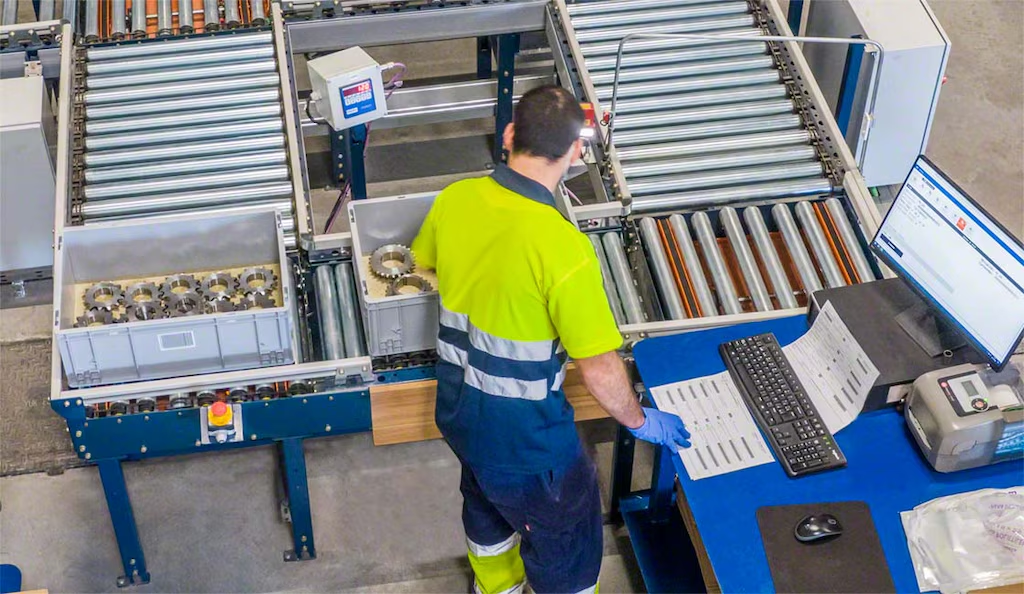
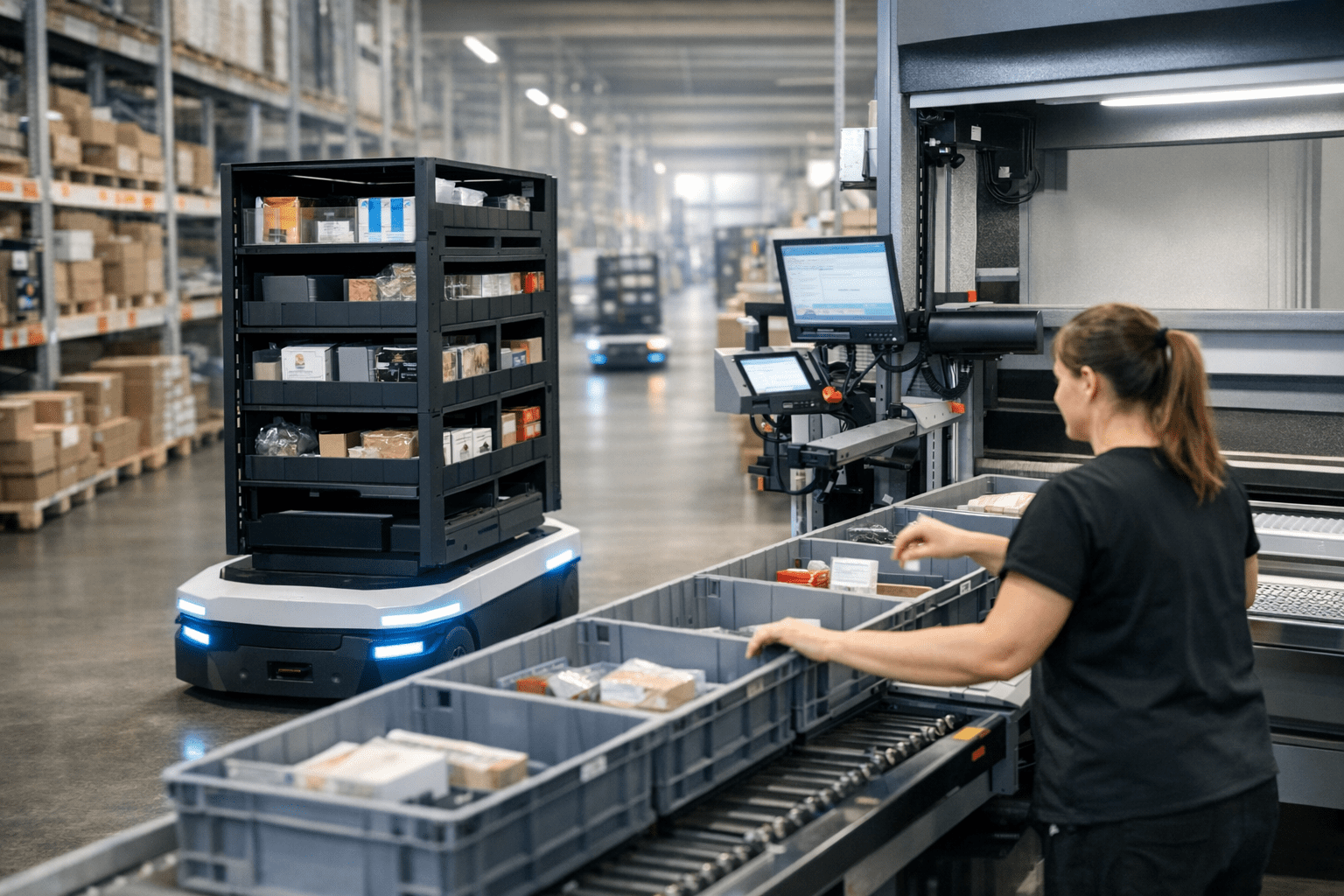
With goods-to-person systems, inventory is automatically delivered to a fixed ergonomic workstation. Instead of walking aisles, pickers stay put while:
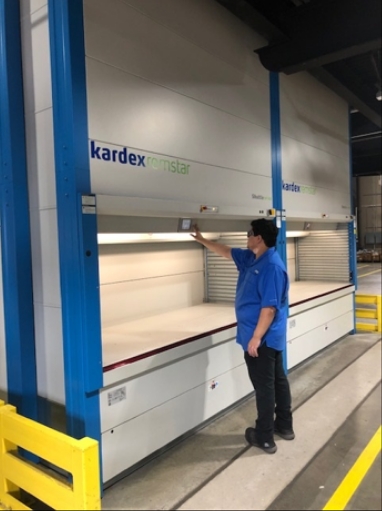
Vertical lift modules deliver trays
AS/RS shuttles bring totes
AMRs transport inventory to pick stations
This approach routinely increases pick rates 2× to 5× compared to manual picking.
👉 Learn more about goods-to-person workflows here
2. Use Vertical Lift Modules (VLMs) for Small Parts Picking
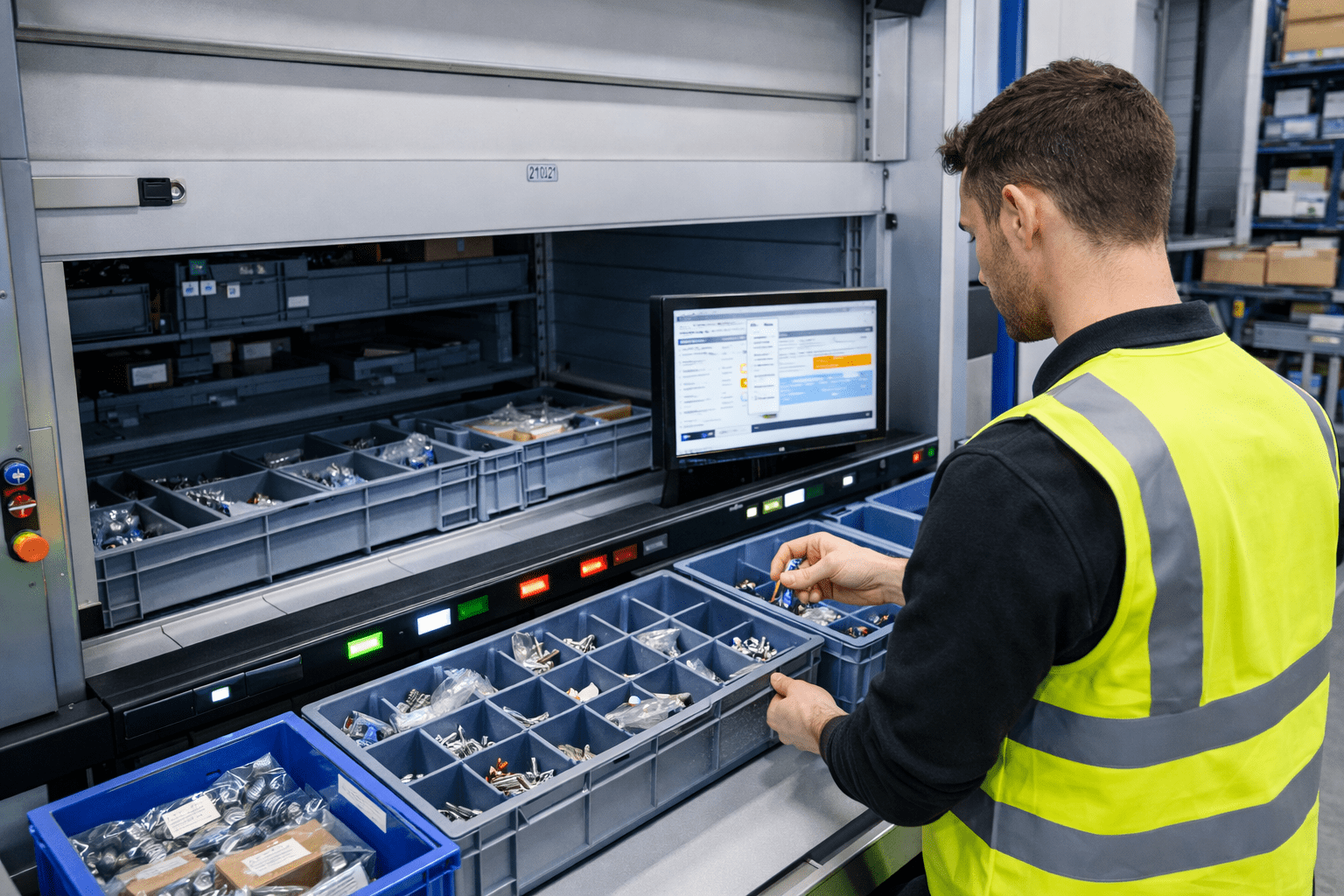
For operations dealing with high SKU counts, small parts, or fast-moving components, Vertical Lift Modules (VLMs) are one of the fastest ways to boost lines picked per hour.
A VLM automatically stores inventory vertically and delivers the exact tray needed in seconds. Combined with pick-to-light or software-directed picking, accuracy and speed increase dramatically.
Benefits include:
Picks in seconds, not minutes
Reduced search time
Higher accuracy with guided picking
Dense storage without added floor space
It’s common to see 300–600+ lines per hour per operator using VLM-based picking workflows.
3. Implement AS/RS Systems for High-Volume Picking
When order volumes climb, manual picking simply can’t keep up.
Automated Storage and Retrieval Systems (AS/RS) use shuttles, cranes, or robotic systems to store and retrieve inventory at high speed with minimal human involvement.
AS/RS systems excel in:
High-throughput fulfillment
Consistent pick rates
24/7 operations
Error reduction
Because retrieval is automated, pickers spend nearly 100% of their time picking — not searching, walking, or waiting.
👉 Learn about AS/RS options here
4. Integrate Pick-to-Light Systems for Faster Decision-Making
Even with automation in place, decision time matters.
Pick-to-light systems remove hesitation by visually guiding operators to:
Exact pick locations
Correct quantities
Proper sequence
Instead of reading screens or paper lists, operators follow illuminated prompts. This dramatically reduces training time and improves consistency across shifts.
When paired with automated warehouse picking systems like VLMs or AS/RS, pick-to-light can boost throughput 20–40% almost immediately.
5. Use AMRs and AGVs to Support Picking Zones
Not every operation needs full automation everywhere.
That’s where Autonomous Mobile Robots (AMRs) and Automated Guided Vehicles (AGVs) shine.
These systems support picking by:
Moving totes between zones
Delivering picked orders to pack-out
Feeding inventory to automated storage systems
AMRs adapt dynamically to traffic and layout changes, while AGVs excel in predictable, repeatable routes.
By removing non-picking tasks from workers, lines picked per hour increase without changing the core picking process.
6. Optimize Material Flow With Automated Sortation
Picking speed doesn’t matter if orders bottleneck downstream.
Automated sortation systems ensure picked items move efficiently to shipping, consolidation, or value-added services.
Common automated sortation methods include:
Conveyor-based sorters
Put-wall systems
Robotic sortation
Zone-based sorting
When integrated into automated warehouse picking workflows, sortation prevents backups that slow pickers and reduces congestion during peak periods.
7. Connect Automation to Inventory Management Software
Automation without software is only half the equation.
To truly maximize lines picked per hour, automated warehouse picking systems must integrate with:
Warehouse Management Systems (WMS)
Inventory management software
Order management platforms
This allows for:
Intelligent slotting
Dynamic pick path optimization
Real-time inventory visibility
Automated replenishment
The result is smoother operations, fewer interruptions, and consistent picking performance — even as order volume fluctuates.
Why Automated Warehouse Picking Delivers Day-One Results
Unlike layout changes or labor-based strategies, automation delivers immediate, measurable improvements.
Warehouses often see:
2×–5× increase in lines picked per hour
Fewer picking errors
Reduced labor dependency
Improved employee ergonomics
Better scalability during peak seasons
Automation turns picking speed into a predictable system instead of a daily struggle.
Frequently Asked Questions (FAQ)
What is automated warehouse picking?
Automated warehouse picking uses technology such as AS/RS systems, vertical lift modules, robots, and software to retrieve and deliver inventory automatically, reducing manual travel and increasing picking speed.
How many lines per hour can automation achieve?
Depending on the system, automated warehouse picking can support 300 to 1,000+ lines per hour per operator, compared to 80–150 lines per hour in manual environments.
Is automated warehouse picking only for large warehouses?
No. Many solutions like VLMs, AMRs, and goods-to-person systems are ideal for small to mid-sized warehouses looking to increase throughput without expanding space.
What’s the difference between AS/RS and goods-to-person?
Goods-to-person is a workflow where inventory comes to the picker. AS/RS is one of the technologies that enables that workflow by automatically storing and retrieving items.
How long does it take to see ROI?
Many automated warehouse picking systems achieve ROI in 18–36 months, depending on labor savings, throughput gains, and space optimization.
Can automation integrate with my existing WMS?
Yes. Most modern automated storage and retrieval systems are designed to integrate with common WMS and ERP platforms.
Final Thoughts
If increasing lines picked per hour is a priority, automation isn’t optional anymore — it’s the fastest path forward.
From goods-to-person systems and VLMs to AS/RS, robotics, and automated sortation, automated warehouse picking creates a scalable, high-performance operation that grows with your business.
If you’re ready to explore what automation could look like in your facility, Vertical Storage USA can help design a solution tailored to your volume, space, and goals.